Non-religious wedding vows put the spotlight where many secular couples want it: on two people, a shared life, and promises you can keep on ordinary days. There is no required liturgy, no sacred formula to recite from memory — only honest language about love, partnership, and the future you are choosing together.
This guide explains what secular vows are, how to write them with real weight, and how to adapt examples for outdoor, civil, and interfaith-friendly ceremonies. Use every sample as a structure, not a script. When you are ready to draft from a blank page, pair these ideas with our guide on this guide to writing your own vows.
What Are Non-Religious Wedding Vows?
Non-religious wedding vows are personal or structured promises spoken in a ceremony that does not rely on doctrine, scripture, or denominational wording. They can be formal enough for a courthouse, poetic enough for a forest clearing, or plain enough for a backyard with folding chairs. What they share is a human focus: who you are to each other, what you have already built, and what you intend to protect.
Secular does not mean shallow. The strongest non-religious wedding vows still sound solemn because they are specific. They name habits, shared jokes, hard seasons you survived, and Tuesday-level promises — not abstract ideals that could belong to any couple. Guests feel the difference immediately when a line could only have been written by you.
If you are comparing tones, contemporary vow ideas often overlap with secular style: conversational, partnership-first, and free of archaic cadence. Non-religious vows simply make the boundary explicit — the meaning comes from your relationship and values, not from a faith tradition. Couples who prefer faith language can explore vows rooted in faith instead; this page stays fully secular.
"You are my favorite adventure and my softest place to land. Today I promise to build a life with you that is curious, kind, and brave — to choose us in every season, and to keep making ordinary days feel like home."
Writing Secular Vows with Meaning
Start with a simple frame: a personal opening, one vivid detail only your partner would recognize, two or three concrete promises, and a short close that chooses them again. Read every draft out loud. If a sentence sounds like a greeting card or a legal form, rewrite it in the voice you use when you are being sincere.
Meaning in secular vows comes from specificity and follow-through. Avoid stacking metaphors no one uses in real life. Prefer lines you would still mean after a long week: listening before fixing, celebrating their wins, protecting the friendship under the romance, and showing up when plans fall apart.
- One shared memory that only the two of you would recognize
- One quality you admire that is not generic "kind" or "funny"
- Two or three promises you can keep on ordinary Tuesdays
- A closing line that feels final when spoken slowly
For storytelling patterns that stay hyper-personal, borrow structure from personal wedding vows — never the exact details. Your non-religious wedding vows should sound like a letter you would actually send, not a speech you would never say again.
"I have watched you turn hard days into something we can face side by side. I vow to keep walking with you — patiently, honestly, and with a full heart — through every chapter we write together."
Non-Religious Vow Examples for Outdoor Ceremonies
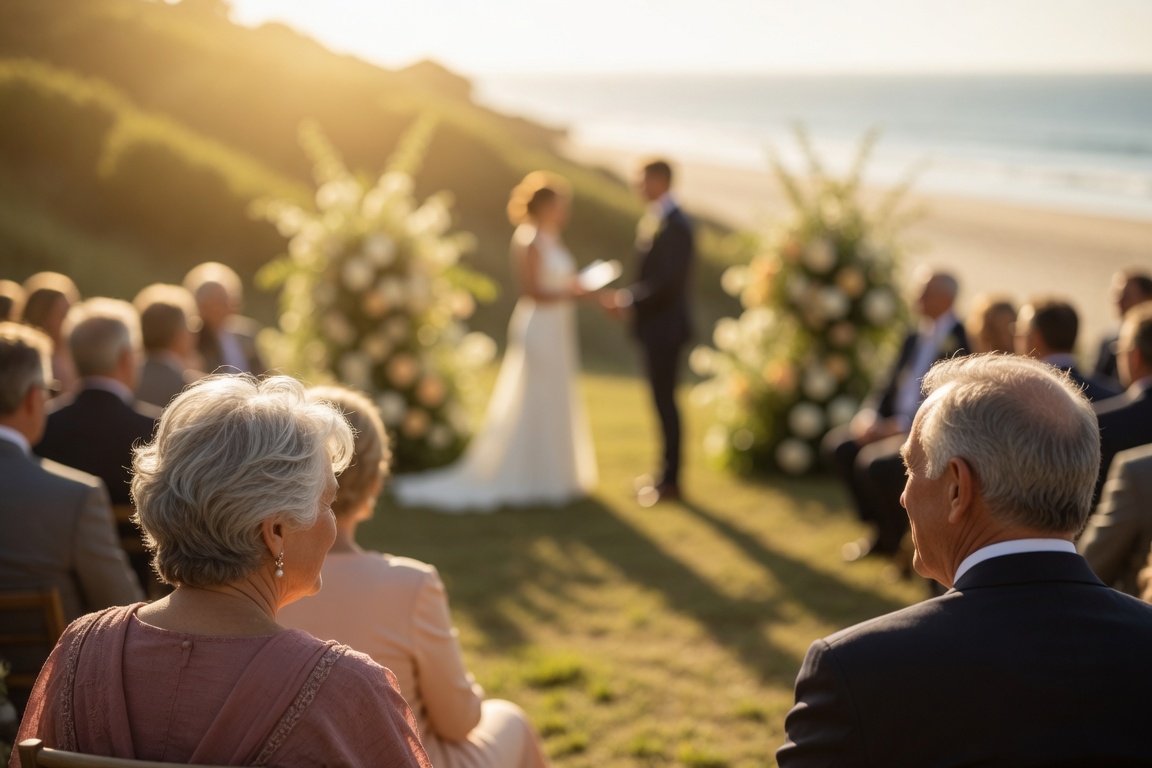
Outdoor ceremonies already do half the atmosphere work: light, wind, trees, water, open sky. Non-religious wedding vows for those settings often lean into nature as metaphor for growth, seasons, and shared journeys — without turning the speech into a travel brochure. Keep the landscape as texture; keep the partner as the subject.
Write for acoustics too. Outdoors, shorter sentences travel better. Aim for one to two minutes, and practice once without a microphone so you know which lines need more breath.
"Standing here with you under this sky, I promise to love you with the same steadiness I feel in quiet mornings and long walks. I will be your teammate when life is wild and your calm when it is still. Wherever our path leads — city streets or open trails — I choose you as my partner and my home."
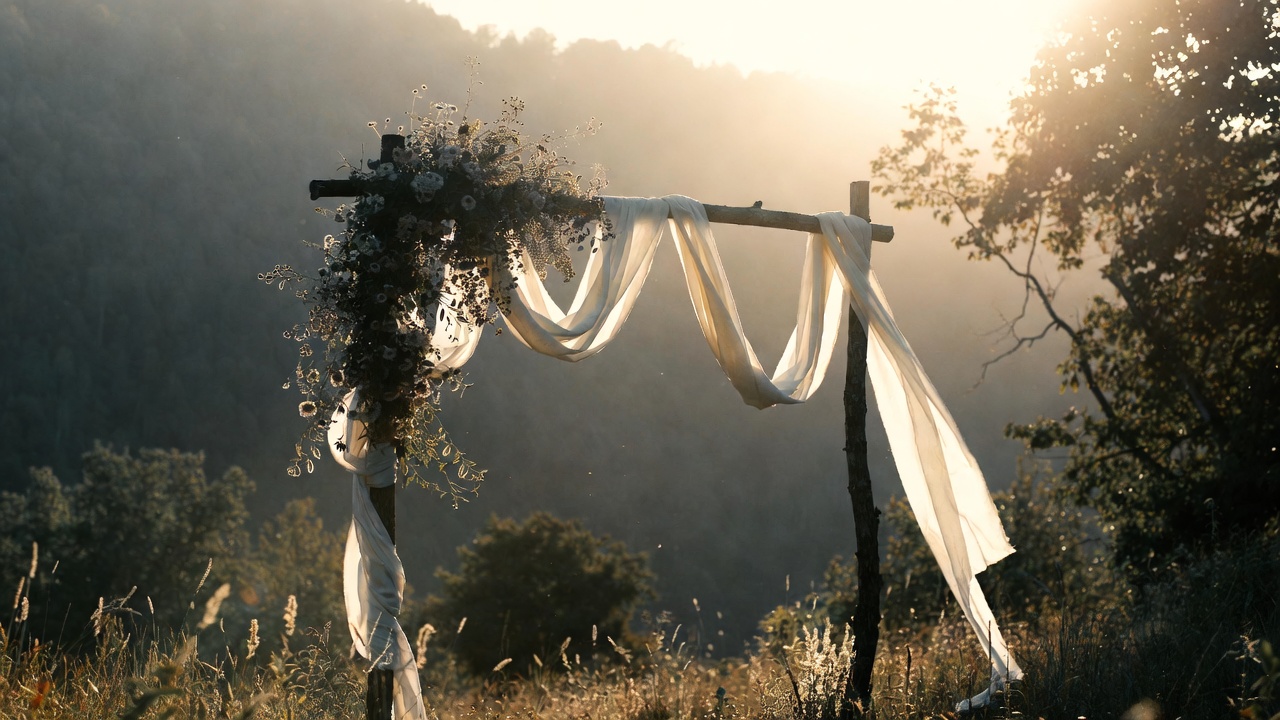
Swap every outdoor detail for something true to your venue and story. A forest arch is beautiful; a single shared memory is what guests will remember. If the wind is loud, print a backup card and keep your eyes on your partner more than on the page.
Non-Religious Vow Examples for Civil Ceremonies
Civil ceremonies are often shorter, more formal, and clock-aware. Non-religious wedding vows still work beautifully here — they just need to be crisp. Many couples exchange a brief personal statement after the legal wording, or replace generic civil lines with promises they wrote themselves when the officiant allows it.
Ask early what is required versus optional. Then draft vows that fit the room: courthouse quiet, hotel ballroom, or city hall steps. Clarity beats flourish. One sincere memory and three clean promises can outperform a page of purple prose.
A strong civil-length draft might open with partnership, name one real quality, then close on loyalty: "I take you as my partner in every sense of the word. I promise to respect you, to tell you the truth, and to keep choosing this life we are building — in ordinary weeks and in milestone years." Another short option: "You are my best friend and my favorite person. I vow to listen when it would be easier to argue, to celebrate your dreams as if they are mine, and to love you with patience and humor for all the days ahead."
If your civil service is tightly timed, prepare a 45–60 second version and a 90-second version. Cut adjectives first; keep the promises. Practice once standing up so the legal lines and personal lines flow without awkward silence.
Non-Religious Vows for Interfaith Couples
Interfaith couples sometimes want a ceremony that honors both backgrounds without centering either tradition in the vows. Non-religious wedding vows give you a shared language: love, loyalty, family, home, and mutual respect. You can still include cultural rituals elsewhere in the day while keeping the spoken promises fully secular.
Talk together before you write. Decide whether family heritage appears as a single warm sentence, stays in readings or music, or remains private. The goal is unity in the vow moment — not a debate, not a compromise that leaves both of you flat, but language you both can say with a full heart.
- Agree on secular core promises first
- Add at most one inclusive line about family or culture if both want it
- Close on the partnership between the two of you
"I promise to honor the life we create together — a home of respect, laughter, and loyalty. I will protect our partnership, welcome the people we love, and walk beside you with curiosity and care for all our years."
When families expect traditional wording, a short civil or secular exchange plus a private letter can ease tension. Your non-religious wedding vows only need to satisfy the two people saying them — and the life you will actually live after the last guest leaves.
You may also find helpful wording in Wedding Vows for Older Couples: Meaningful Examples.
Couples often continue with Atheist Wedding Vows: Heartfelt Examples & Ideas after drafting their core promises.
For more inspiration on this topic, explore our guide to Cool Wedding Vows for Him: Confident Examples That Don't Try Too Hard — with examples, structure tips, and wording you can adapt for your ceremony.
If you want a related angle next, read this guide on wedding vows for an interfaith couple: honest examples for additional examples and ceremony-ready language.
Frequently Asked Questions
What are non-religious wedding vows?
Non-religious wedding vows are promises spoken in a secular ceremony that focus on love, partnership, and commitment without doctrine or scripture. They can be personal, short, formal, or casual — as long as they sound like you and name promises you intend to keep.
Can I write my own secular vows for a civil ceremony?
Often yes. Many civil officiants allow a short personal statement alongside or instead of generic civil wording. Confirm length and any required legal language early so you draft once with confidence.
How long should non-religious wedding vows be?
Aim for about one to two minutes when read slowly. Outdoor and civil ceremonies often favor the shorter end so guests stay present and logistics stay smooth. Read aloud and cut anything that does not earn its place.
Do secular vows still feel meaningful without faith language?
Yes. Meaning comes from specificity and sincerity: shared memories, honest admiration, and concrete promises. Guests respond to lines that could only belong to your relationship, not to how traditional the vocabulary sounds.
What should interfaith couples put in non-religious vows?
Start with shared values — loyalty, kindness, partnership, home — then decide together whether culture or family appears in a single inclusive sentence. Keep the vow focused on the two of you so both partners can speak every line honestly.
Where can I find more vow writing help after this guide?
Use this page for secular examples and tone, then draft with a clear structure and plenty of practice out loud. Adapt every sample until nothing generic remains — your final vows should sound like a conversation only the two of you could have.