Simple 3 sentence wedding vows examples exist because a ceremony does not need a speech. It needs three keepable lines you can finish while looking at one person: who they are to you, what you will do on ordinary days, and a close that chooses them again. Low-key weddings — a courthouse garden, a backyard, dinner with twelve people — often land better when the vows match the room.
This guide is a three-line frame, not a novel. You will get a notice-promise-close shape, examples you can steal the arc from, and a way to keep the card from sounding like a greeting. For a wider set of brief samples after you lock the idea, start with compact vow wording.
Why Three Sentences Count as a Full Vow
Three sentences are not a consolation prize. They are a complete job if each line does one thing. Guests do not need a biography. They need to witness a decision. Your partner does not need poetry. They need a promise they can remember on a tired Tuesday.
A low-key ceremony already has a smaller temperature. A long performance can feel like you brought a microphone to a kitchen table. Three honest sentences keep the vow in scale with the day. If you want a fuller drafting walkthrough after the three lines exist, use the vow writing walkthrough — then cut until the card still works when every extra adjective is gone.
Read the draft standing up, once, at the pace you will use. If you run out of air in the middle of a sentence, it is two sentences pretending to be one. Break it.
The Notice, Promise, Close Frame
Do not open a document titled "vows" and wait for a paragraph. Write three labeled lines. Give yourself fifteen minutes. Do not polish. The labels are the whole trick: they tell you what belongs on the card so you stop hunting for a better personality.
- Notice: who they are to you, in a sentence you would actually say at dinner
- Promise: two Tuesday-level actions you can keep when you are tired — not a list of virtues
- Close: a last line that chooses them again, short enough to say while looking up
That is the entire inventory. Everything else is optional. If a line could belong to another couple, the notice is not done yet. If the promise is "always" or "forever," it is still a slogan. Name the behavior.
"You are my favorite ordinary day. I promise to listen when I would rather be right, and to come home to you even when the week is loud. I choose this life with you on purpose."
Notice the temperature. No timeline of every year. No metaphor that needs explaining. No joke that needs a setup. Three jobs, once. If the first draft is clumsy, you are on schedule.
Romantic Three-Sentence Vow Examples
Romance in three sentences is evidence, not adjectives. One living detail, two keepable promises, a close. Steal the arc. Replace every habit until nobody else could honestly say this paragraph about this person.
"I still notice the way you settle a room just by being in it. I vow to keep our friendship under the romance, and to love you in the small rooms as much as the bright ones. Today I choose you, and I will keep choosing you."
If that feels too warm for your voice, cool the nouns, not the promise. "You make a regular evening feel like home" is still romantic. "You are my everything" is a poster. Read the line at the table. If you would never say it, rewrite until you would.
Courthouse and Backyard Examples
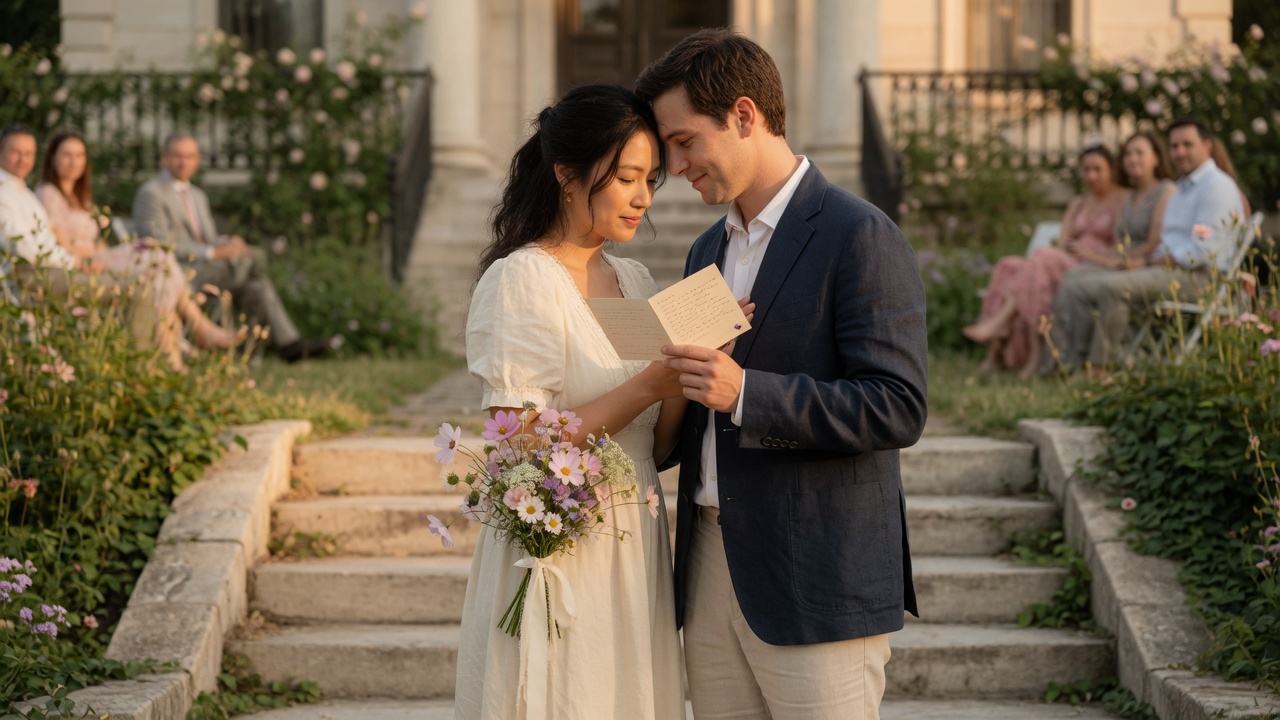
A civil ceremony, a garden with folding chairs, or a living room with a judge on Zoom does not ask you to sound like a cathedral. It asks you to sound like yourselves in nicer clothes. Simple 3 sentence wedding vows examples for those rooms should be able to survive without music swelling underneath them.
"I am not here to make a speech. I am here to marry you. I promise to be kind when I am tired, honest when it would be easier to go quiet, and loyal in the life we already share."
Ask the officiant what is required versus optional. Some civil ceremonies already carry the legal language. Your three sentences can stay personal. Confirm that before you add a fourth line "just in case." Extra ceremony is how a low-key day accidentally becomes a performance.
How to Keep Three Lines From Sounding Generic
Generic happens fast when you are short on words. The tempting filler is also the least useful: soulmate, my rock, through good times and bad. Those lines complete a sentence and still leave the card empty. Guests have heard them. Your partner cannot use them on a Tuesday.
Use one fact only the two of you would recognize — a habit, a night, a way they show up when you are not at your best. Then attach a promise that matches it. "You make coffee without asking" can become "I promise to notice the small ways you take care of this life." If you want a more custom shape after the three lines exist, steal structure — never the life — from deeply personal vow ideas. Custom does not mean long. It means the paragraph would fail if you swapped the names.
Cut anything that would still sound impressive with a stranger's name on it. That is the whole test.
Match Length, Not Vocabulary
You do not need to match your partner's eloquence. Matching spoken time is kinder. A thirty-second vow next to a four-minute vow can feel uneven even when both are true. Agree on three sentences, or on a similar range, so the ceremony does not tilt.
If a blank card still freezes you, drop the three jobs into template structures for your vows and overwrite every generic phrase before you leave the table. Slots are scaffolding. They are not the vow until your facts are in them.
When a Fourth Sentence Earns Its Place
Sometimes three is almost enough and the missing piece is one specific memory. A fourth sentence can earn its place if it is evidence, not padding. A fifth is usually a slogan wearing a tuxedo. If you need a reliable order of operations without adding bulk, study wedding vow structure and keep your extra line inside that shape.
If children, a blended family, or a long friendship needs naming, one warm sentence is enough. Then return to the promise between the two of you. The room does not need a family meeting. Your partner needs to hear they are still the point.
More Three-Sentence Examples You Can Rewrite
Steal the arc, not the life. Notice, promise, close. Replace every habit until the paragraph would fail with the names swapped. If you want a slightly cooler register after you lock your own draft, browse modern wedding vows second, not first, so their phrasing does not colonize yours.
"You make a regular evening feel like the point. I promise to stay curious about you, to tell you the truth, and to keep making a quiet home. That is the whole vow — I am yours."
Print the card large enough to read without hiding your face. Mark one pause before the last line. Stop rewriting two days before the ceremony so the words can settle. A three-sentence vow is not a lesser vow. It is a keepable one, said on purpose, without a show.
Frequently Asked Questions
Are simple 3 sentence wedding vows examples enough for a real ceremony?
Yes, if each sentence does a job: who they are to you, a keepable promise, and a close that chooses them again. Meaning comes from a true detail and a Tuesday-level commitment, not from how long you can hold the room. Confirm with your officiant that any required legal language is already covered so your three lines can stay personal.
How long should a three-sentence wedding vow be when read aloud?
Most three-sentence vows land between twenty and forty-five seconds when read slowly, often about 40 to 80 words. Read standing up at the pace you will use. If you run out of air, break the sentence. Agree on a similar spoken length with your partner so one reading does not accidentally become a speech next to a postcard.
Should both partners write three-sentence vows?
Matching eloquence is not required. Matching spoken time is kinder. If one of you writes longer, ask them to land closer to a minute so the ceremony does not tilt. You can also split the work: a short public card plus a longer private exchange before the ceremony, as long as your officiant knows the plan.
How do I keep three-sentence vows from sounding generic?
Use evidence, not adjectives. One habit or night only you would recognize, two promises you can keep when you are tired, and a close in your real voice will outperform a stack of forever lines. Read the draft out loud and cut anything you would never say at dinner. If you could swap the names and still sound impressive, it is not yours yet.