Learning how to memorize your wedding vows is less about perfect recitation and more about owning the meaning so the words can leave your mouth when your heart rate spikes. Some couples want every line by heart. Others only need the opening and the final promise. Both approaches work if you train for the real moment — standing up, a little shaky, looking at someone you love.
This guide covers when full memory is worth it, a practical week-by-week method, what to do if a line disappears, and why a backup is not a failure. If the text is still unfinished, lock wording first with how to write wedding vows, then start memory work. Rewriting while memorizing trains the wrong draft into your head.
Should You Memorize Your Vows Completely?
Full memorization is optional. Guests care that you mean the promise, not that you performed a monologue without notes. Choose full memory only if three things are true: your vows are short enough to rehearse daily, you stay relatively calm under pressure, and you will keep a printed backup nearby no matter what.
A hybrid often wins. Memorize the first two sentences and the closing vow. Keep the personal middle on a card in large type. You still look present; you still have a safety rail. That blend is especially smart if your draft is longer than about 90 seconds when read slowly.
Shorter text is easier to own. If you are still trimming, study short wedding vows for length and rhythm, then freeze your final wording before the first memory session. For delivery beyond pure recall — pace, tears, the room — pair this article with how to say your wedding vows.
"I choose you with a clear mind and a steady heart. I promise to listen when it is hard, celebrate when it is easy, and build a life that feels like home with you."
Lines like that stick because each sentence has one job. Dense poetry with nested clauses is harder to recover if you blank. Edit for the ear first, then memorize.
Lock the Final Draft Before You Memorize
Memory is sticky in both directions. If you practice an early draft, the old adjectives will fight the new ones on ceremony day. Treat the final text like a freeze date: print it, date it, and stop polishing except for a true error.
Read the draft aloud once. Cut any sentence that only works on paper. Prefer concrete verbs — choose, stay, listen, forgive — over stacked metaphors. If the structure still feels thin, pull a skeleton from ready-to-personalize vow templates or tighten personal details using patterns from personal wedding vows, then freeze again.
Agree with your partner on approximate length so one of you is not memorizing a novel while the other has six lines. Matching word counts is unnecessary. Matching energy helps.
A Simple Method That Actually Sticks
Use chunking, not brute force. Split the vow into three or four natural beats: open, story or qualities, promises, close. Master one chunk at a time. Do not move on until you can say the chunk twice without looking, then glue it to the next chunk.
- Day 1–2: Read the full vow aloud twice daily. Mark breath points with a slash after every one or two sentences.
- Day 3–4: Memorize chunk one, then chunk two. Always start from the top when you practice so transitions stay strong.
- Day 5–6: Add remaining chunks. Practice standing, holding a blank card the size you will use (even if empty — train the posture).
- Day 7: Full run from memory once for a trusted person, once alone. Note only the weak spots; drill those lines in isolation.
- Ceremony week: One full out-loud pass daily. Stop rewriting. Sleep matters more than a midnight cram.
Record yourself once on your phone. Listen for rushes and mumbles. Fix those lines with slower practice, not with more adjectives. If a personal middle still will not stick, that is a signal to keep it on the card rather than force a shaky monologue.
Spaced repetition beats marathon sessions. Three short runs beat one exhausted hour. Practice in slightly distracting places — kitchen, driveway, soft background noise — so silence is not a requirement for recall.
What to Do If You Blank Mid-Vow
Blanking is common and recoverable. Pause, breathe, and look at your backup. Skip the lost phrase and pick up at the next full sentence. Guests will wait. Your partner already knows why the moment hit.
Do not apologize at length. A soft smile and the next clear promise is enough. If your voice disappears, stand still for three seconds, swallow, and continue. Silence feels longer to you than to anyone watching.
"You are my favorite person and my safest place. I vow to love you with patience, humor, and honesty — today, and in every ordinary day we get."
Having a short, steady line you can land on — even if it is not the exact next sentence you planned — keeps meaning intact. Train one recovery sentence in practice so your brain has a familiar exit ramp. Keep large-print text with you or with the officiant. A backup is professionalism, not a lack of love.
If classic cadence helps you recover when emotion spikes, some couples keep a clean copy of classic ceremony vow wording as a last-resort skeleton. Most will never need it. The card with your own words is enough.
Memory Aids and Ceremony-Day Safety Nets
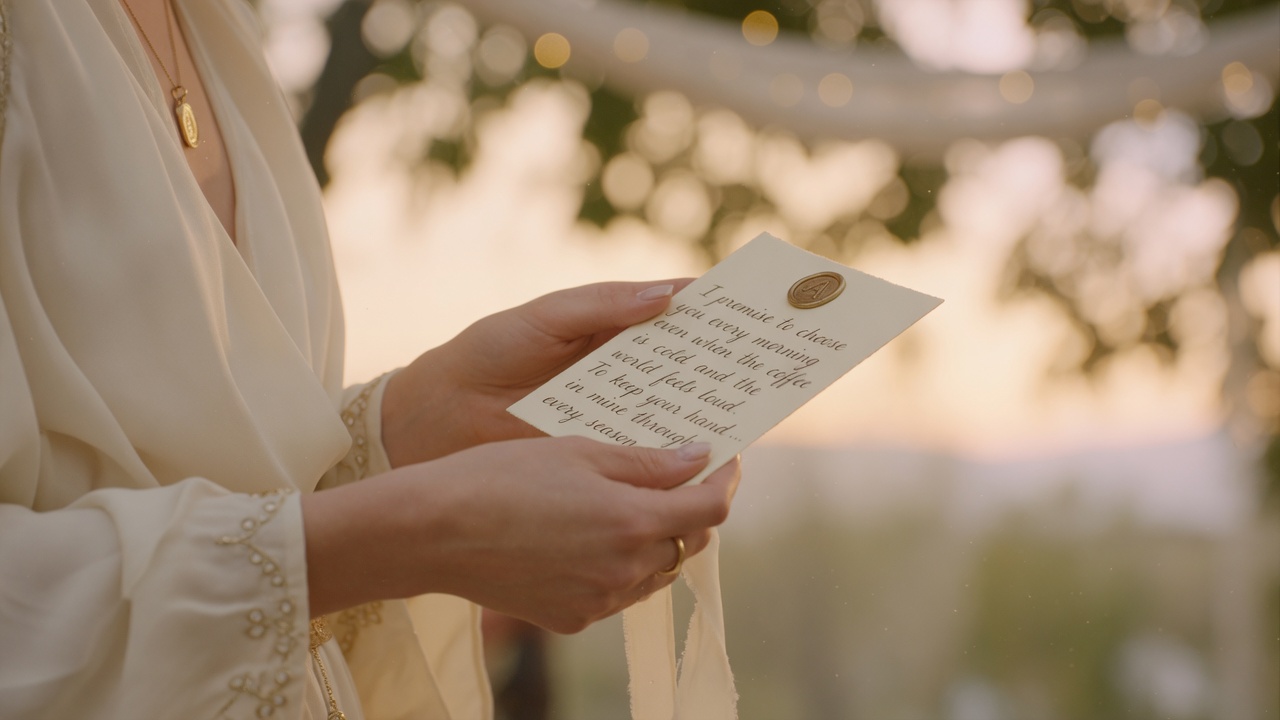
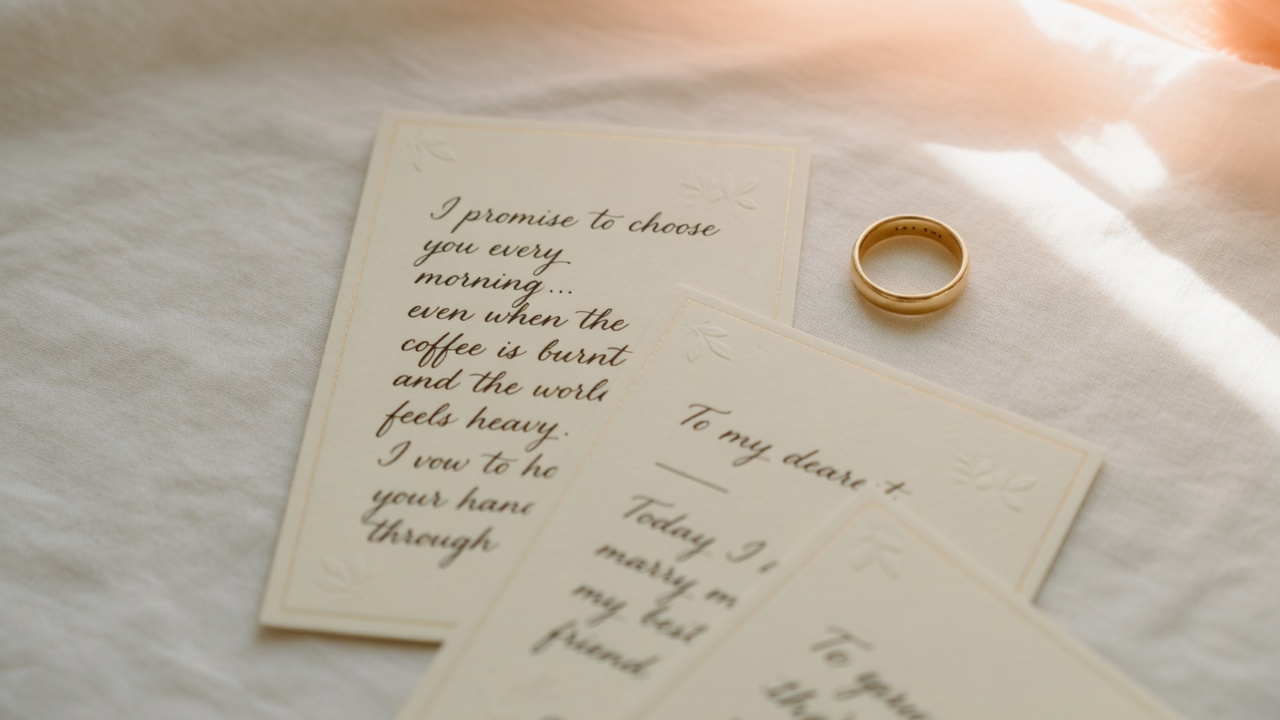
Stack the environment in your favor. Print large type. Use a stiff card that does not flap in wind. Put a second copy in a pocket or with someone who can hand it over without a scene. Tell the officiant you may glance down — they can hold space if you need a beat.
- First line on a tiny note in your palm or on the ring pillow card (optional)
- Full vow in large type on a ceremony card
- Officiant or best person holds a spare
- One calm read-through the morning of — not five panicked rewrites
- Water nearby; light food earlier so caffeine alone is not running the show
"Years from now I want you to remember this: I chose you on purpose. I still choose you. I will keep choosing you when the days are ordinary and when they are hard."
That kind of close is worth memorizing even if the middle stays on paper. End on the promise you mean most. How to memorize your wedding vows well is about reliable meaning under stress — not a perfect score on recall.
Frequently Asked Questions
How long does it take to memorize wedding vows?
For a one- to two-minute vow, most people can own the text with daily out-loud practice over about a week. Shorter vows stick faster. Longer drafts need more days or a hybrid approach with notes for the middle. Start only after the wording is final.
Is it okay not to memorize my wedding vows?
Yes. Reading from a card is completely acceptable and often clearer under pressure. Many couples memorize only the opening and closing. Guests care about sincerity and eye contact, not whether you recited every word from pure memory.
What is the best way to memorize wedding vows quickly?
Chunk the vow into three or four sections, master one section at a time, and always practice from the top so transitions stay solid. Stand up, speak out loud, and use short daily sessions instead of one long cram. Keep a printed backup even when you feel ready.
Should both partners memorize the same way?
Not necessarily. One person may read while the other memorizes. Agree on approximate length and tone so the moment feels balanced, but use the method that keeps each of you calm and clear.
What if I forget my vows during the ceremony?
Pause, breathe, look at your backup card, and continue from the next full sentence. Skip the lost phrase rather than restarting from the beginning. A brief silence is fine. Avoid long apologies; pick up the promise and keep going.
Can I use a teleprompter or phone to help remember my vows?
Yes, if you practice with the same setup beforehand and the device stays discreet and reliable outdoors. Large-print cards are simpler in wind and bright sun. Choose the aid you have actually rehearsed with, not a new system on the morning of the wedding.