A vow renewal ceremony is not a redo of your wedding day. It is a deliberate pause — a chance to name what marriage has already taught you and to choose each other again with eyes open. Whether you are marking ten years, twenty-five, or a season of hard-won healing, renewal vows work best when they sound like a couple who has lived the ordinary days, not only the highlight reel.
This guide covers what a vow renewal is, whether you should write new vows, short and longer examples written in an already-married voice, and ideas for milestone anniversaries. Use every sample as a structure, not a script. When you want a full drafting process from blank page to ceremony, pair these ideas with how to write wedding vows.
What is a Vow Renewal Ceremony?
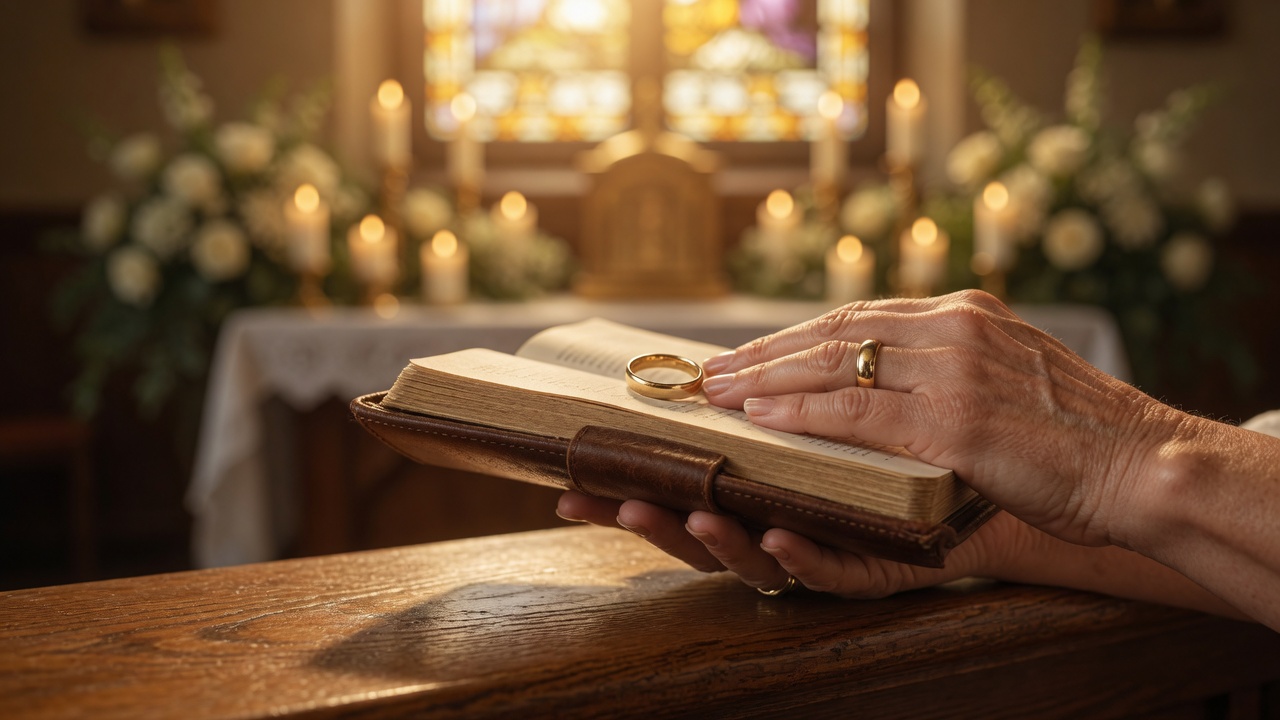
A vow renewal ceremony is a private or public recommitment between partners who are already married. There is no legal requirement in most places — you are not signing a new license. You are celebrating the life you have built and restating your promises in language that fits who you are now.
Renewals can look like a full wedding restaged for friends, a quiet beach exchange with two witnesses, or a few spoken lines at the dinner table on an anniversary night. What they share is intent: you are not inventing a first love story from zero. You are honoring a story that already has chapters.
That lived history is your advantage. First wedding vows often reach for hope and imagination. Renewal vows can reach for evidence — nights you stayed, jokes that still work, seasons you survived. If you want inspiration that stays hyper-specific to your bond, browse vows drawn from your story for storytelling patterns, then rewrite every detail so only your partner would recognize them.
Guests, if you invite them, are not there to watch a performance of perfection. They are there to witness two people who already know the cost of love and still mean it. Keep the ceremony proportional to your comfort: short readings, a shared letter, rings you already wear, or simply facing each other and speaking clearly.
Do You Write New Vows for a Renewal?
Most couples write new vows for a renewal — not because the original ones failed, but because the people saying them have changed. You can also re-read your original vows and add a short postscript, blend a classic line with a new promise, or keep traditional wording for the formal exchange and speak personal lines privately afterward.
Write new vows when you want the ceremony to name the years between then and now: children, careers, loss, moves, quiet Tuesdays that built the real marriage. Reuse or lightly adapt original vows when the language still feels true and you mainly want the ritual of saying them again in front of people who love you.
A simple decision rule: if your first vows still sound like the two of you, keep the spine and update the details. If they sound like a younger version of hope without the texture of real life, draft fresh. For classic ceremony language you can adapt or mix with personal lines, see traditional vow forms.
Agree together on length and tone before you write. Renewals do not need matching word counts, but they should feel like the same relationship — not two unrelated speeches. Read drafts aloud once. If a line only works on paper, cut it.
How to Structure Renewal Vows
A reliable renewal structure is four beats: open with who they are to you now, name one truth only the years could teach, make two or three concrete promises for the next chapter, and close by choosing them again. That arc fits a one-minute reading or a two-minute one without feeling unfinished.
- One present-tense opening (who they are to you today)
- One lived memory or hard season you faced together
- Two or three promises you can keep on ordinary days
- A closing line that chooses them again, clearly
Specificity still beats poetry. "I will listen when you are tired" lands harder than "I will love you forever" alone. Borrow process and pacing from a full write-up when you stall, then return to your own timeline — anniversaries, inside jokes, the quiet ways you already show up.
Print large type. Mark breath points. You do not need to memorize every word; you need to look up between sentences. Renewal ceremonies often feel more emotional than first weddings because the room already knows the story. Short, clear language keeps you steady.
Vow Renewal Vow Examples (Short & Sweet)
Short renewal vows work beautifully at intimate dinners, destination weekends, and any ceremony where you want the moment to feel focused rather than staged. Aim for under a minute when read slowly. Every line should earn its place.
"You are still my favorite person and my safest place. I renew my vow to choose you, listen to you, and love you — in this season and in every ordinary day ahead."
"Years later, I know more and love more. I promise again to walk beside you with patience, humor, and a full honest heart."
Swap in one true detail — a nickname used sparingly, a shared habit, a place that means home — so the short form still sounds like you. If you want more compact samples outside the renewal frame, browse example vows you can adapt and rewrite them in an already-married voice: less first-meeting wonder, more practiced loyalty.
Practice once standing up. Brief vows feel unfinished only when you rush. Slow delivery is what makes short language feel complete.
Vow Renewal Vow Examples (Reflecting on Years Together)
Longer renewal vows can hold history without becoming a biography. Pick one or two chapters — a hard season you survived, a joy you did not see coming, a way your partner has stayed constant — then move into promises for the next stretch. Guests do not need the full timeline; they need the meaning.
"I have watched you become my calm in crowded rooms and my courage on quiet nights. We have carried each other through seasons I did not know how to name at the start. Today I vow again to protect the friendship under our romance, to forgive quickly, and to keep building a home that feels like the safest place we know. I chose you once in hope. I choose you now in knowledge — and I would choose you again."
"Loving you has never been only the easy days. It has been appointments and airports, late bills and late laughter, the quiet work of staying kind when we were tired. I renew my promise to be your teammate, to celebrate your wins as if they are mine, and to meet hard seasons with a hand that does not let go. My life is better because I built it with you. Today I say that with clearer eyes than I had on our wedding day."
Edit ruthlessly. If a memory only makes sense to you two and does not serve the promise, keep it private. If a line would embarrass your partner in front of family, cut it. Reflection should honor the marriage, not reopen old arguments for an audience.
When the draft is long, cut adjectives first and keep the verbs: stay, listen, choose, repair, celebrate. That is the language of a vow that has already been tested.
Vow Renewal Ideas for Milestone Anniversaries
Milestone renewals work best when the format matches the anniversary energy. A five-year weekend away may want short private vows on a balcony. A twenty-fifth may want a room full of people who watched you grow up together. Start with the feeling you want — intimate, festive, sacred, playful — then design backward.
- 5–10 years: Small gathering or trip; short vows plus a letter you exchange later
- 15–20 years: Friends-and-family brunch or garden ceremony; one shared reading and personal vows
- 25–50 years: Larger celebration if you want it; optional original vows re-read plus a new postscript
- Any year after a hard season: Private exchange first; invite others only if it feels healing, not performative
Other ideas that travel well: renew rings you already wear, plant a tree, toast with the same song from your first dance, ask children or close friends to read a blessing, or host a "no gifts, just stories" dinner where guests share one memory of your marriage. Keep logistics light so the vows remain the center.
If one partner loves tradition and the other wants something casual, split the day: a short formal exchange at golden hour, then a relaxed meal. The vow moment only needs sincerity and a clear recommitment — not a second wedding industry checklist.
Write early enough to practice once without pressure, then stop editing two days before. Milestone energy can make you over-polish. Your partner does not need perfect prose. They need the sound of you meaning it again.
Couples often continue with this guide on wedding vows for a second time around: honest examples after drafting their core promises.
If you want a related angle next, read this guide on what to write in wedding vows when you're stuck for additional examples and ceremony-ready language.
Frequently Asked Questions
What is a vow renewal ceremony?
A vow renewal ceremony is a recommitment between partners who are already married. It is usually symbolic rather than legal — a chance to celebrate your journey and restate your promises in language that fits who you are now.
Do you need new vows for a vow renewal?
Not always. Many couples write fresh vows that reflect the years together; others re-read their original vows or add a short postscript. Choose the option that still sounds true when you say it out loud.
How long should vow renewal vows be?
Most couples do well between one and two minutes when read slowly. Intimate renewals can be shorter. Agree on a range together so both readings feel balanced in the moment.
Is a vow renewal legally binding?
In most places a vow renewal is ceremonial, not a new legal marriage. Confirm local rules if you plan any legal paperwork, but the spoken recommitment itself is typically symbolic.
Who should be invited to a vow renewal?
Anyone who makes the day feel true — from only the two of you to the full original wedding guest list. Prioritize comfort and meaning over obligation. A smaller room often makes the vows easier to hear and feel.