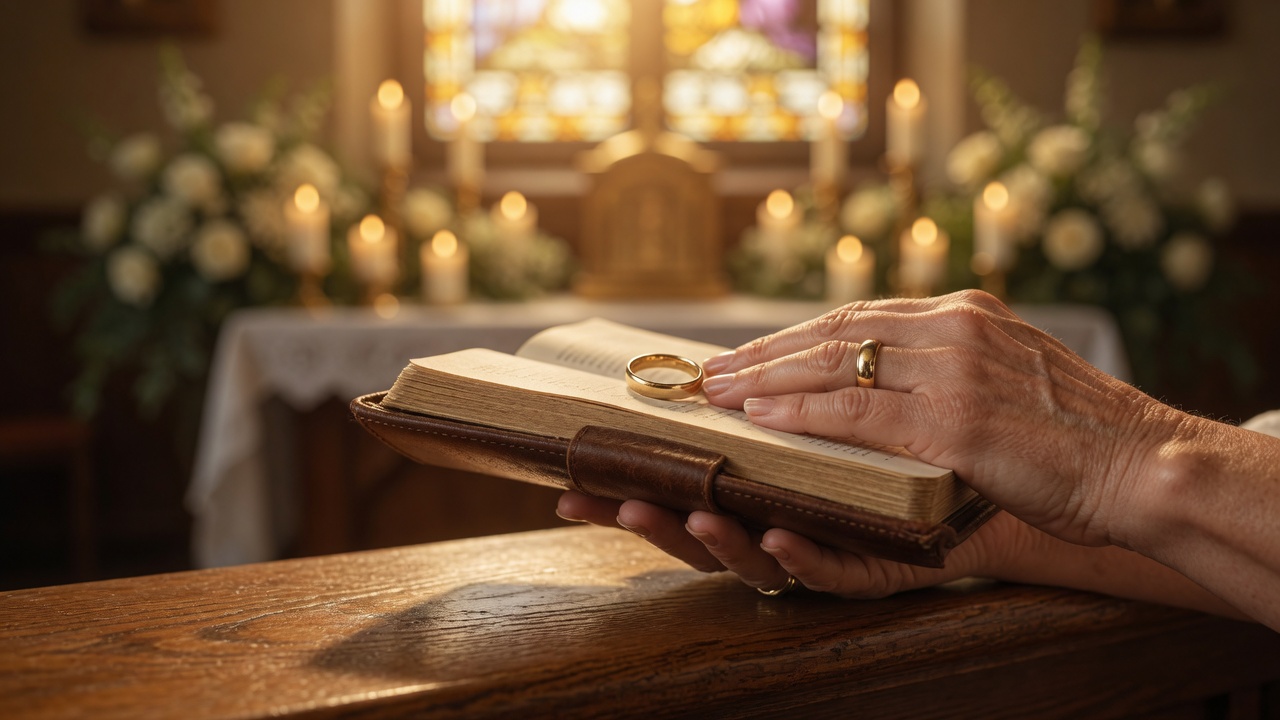
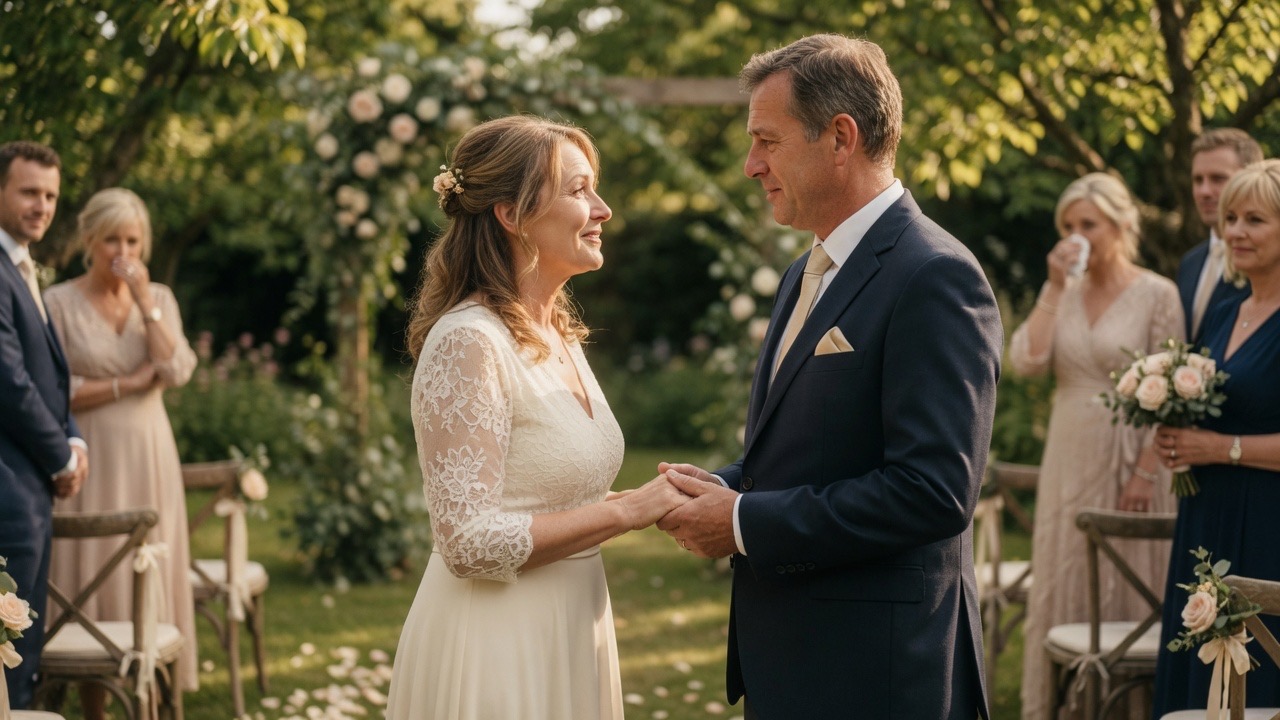
Wedding vows for a second time around do not need to pretend this is your first lesson in love. They need to sound like a person who already knows what ordinary days cost — and is still choosing someone, on purpose. Whether you are marrying after a divorce, after loss, or after a long season of being sure you would not stand up again, the job of these vows is the same: name what you know now, make promises you can keep, and leave the past in a place of respect rather than performance.
This is not a vow renewal. You are not restating a marriage that already exists. You are making a new one with a clearer heart. Use the examples as temperature, not scripts. When you want a full blank-page walkthrough after the tone is locked, start with our step-by-step vow writing guide.
What Second-Time-Around Vows Need to Do
First wedding vows often reach for hope and imagination. Wedding vows for a second time around can reach for evidence. You already know how you show up when you are tired, what breaks a household, and which slogans do not survive a real week. That knowledge is the advantage. Guests feel it immediately when a line could only have been written by someone who has already lived a marriage, not only dreamed one.
The vow still has to be a wedding vow — not a therapy recap, not a defense of the first chapter, and not a speech written to prove you have grown. Speak to one person. Keep the room in the background. If a sentence is mainly for your ex, your children, or the relatives who had opinions, it does not belong on the card.
It also helps to name the difference between remarriage and renewal out loud, at least for yourself. A recommitting with new vows is a recommitment inside a marriage that already exists. Second-time vows are a new legal and emotional beginning. The language can share maturity with a renewal, but the close should choose this person for the first time in this partnership — clearly, without borrowing "again" unless you truly mean a life you already built together.
How to Honor the Past Without Performing It
Most people writing wedding vows for a second time around get stuck on the same question: do I mention what came before? Only if both of you are comfortable and the line serves the promise you are making today. A brief, gracious sentence can acknowledge that you did not arrive empty-handed. A timeline of the first marriage, a joke at a former partner's expense, or a speech about lessons learned will turn the ceremony into a briefing.
A useful rule: honor the past in private, and honor this person in public. If children from a previous relationship are in the room, one warm sentence about the family you are building is usually enough. If you are a widow or widower, you do not owe the guests a eulogy inside a wedding vow. Grief can be true and still stay off-mic. The person in front of you needs to hear that this marriage is not a sequel they have to compete with.
"I am not here to rewrite a first chapter. I am here because I know what partnership costs, and I still choose you. I vow to bring the lessons without the bitterness, to keep our home honest, and to love you with the kind of attention that does not need an audience."
If the draft keeps circling the old story, cut until the remaining lines would still make sense if nobody in the room knew your history. What remains is the vow.
A Writing Frame for Remarriage Vows
Start with a messy list, not a thesis. Give yourself twenty honest minutes and write four columns: how they show up on a tired Tuesday, a memory only the two of you would recognize, what you want this household to feel like, and what you will not repeat. Circle the lines that make your throat tighten. Those are the raw materials. Poetry, if you want it, comes later.
- Open with who they are to you in plain speech
- Add one living detail that would fail at a stranger's wedding
- Make two or three Tuesday-level promises you can picture keeping
- Close by choosing them for this marriage, not as a correction of the last one
Read every sentence out loud. If it sounds like a legal form, a recovery speech, or a toast, rewrite it in the voice you use at the kitchen table. Specificity still beats elevated vocabulary: listen before you defend, tell the truth when charm would be easier, treat their people as your people, protect the friendship under the romance.
"You are the person I want ordinary days with. I promise to listen before I defend, to treat your people as my people, and to keep choosing this marriage with open eyes — not as a sequel, but as a life I mean."
If the blank page still fills with adjectives, steal structure — never details — from custom personal vows. Custom does not mean long. It means the paragraph could not belong to anyone else, including the person you used to be.
Blending Families Without Turning Vows Into a Meeting
If children, stepchildren, or a wide circle of "ours, yours, and mine" are part of this marriage, a single warm sentence can make the vow feel complete. A paragraph of household policy will not. Keep the focus on the partnership first. Invite the wider circle second. The ceremony is not the place to assign chores, announce custody rhythms, or make adult children co-sign the romance.
- Name the partnership first
- One respectful sentence for the people you love
- Close on the promise between the two of you
Agree together before the day whether family appears in the spoken vows, in a reading, or only in private letters. Some children want to be named; others prefer a general line about the home you are making. There is no single correct choice — only the one that feels respectful for your actual household, not an internet version of blended-family perfection.
Couples marrying later often share this same pressure to include everyone. If age, adult children, or a long friendship-that-became-love is part of your story, the tone in wedding vows for older couples can help you keep dignity without stiffness. Borrow the restraint. Keep your facts.
Short Vow Examples for a Second Marriage
Shorter wedding vows for a second time around often land harder, especially if the room is full of people who already know too much of your history. Guests do not need a novel. They need a clear, sincere promise. Aim for under a minute when read slowly. Cut adjectives first. Keep the evidence.
"I choose you with a clearer heart than I have ever brought to a promise. I vow patience, humor, and a loyalty that shows up on Tuesdays — not only on the days with an audience."
If the ceremony is intimate, or you hate public speaking, that length is enough. For more compact shapes, look at brief vow examples, then keep one living detail so the short version still fails the stranger test. Practice once standing up. A short vow rushed will feel thinner than it is. A short vow spoken like you mean it can land harder than a page of explanation.
What to Leave Out of Second-Time Vows
The cut list for wedding vows for a second time around is stricter than a first draft, because you have more history that does not need an audience. Leave out the roast of a former partner. Leave out medical histories, money fights, and any sentence that asks the room to take a side. Leave out movie quotes and throw-pillow slogans; they sound thinner the second time you marry, not wiser.
Also leave out the speech about how you finally found "the one." It can accidentally turn your partner into a prize and your past into a cautionary tale. Better: one living detail, two or three keepable promises, and a close that chooses this life without requiring anyone else to be the villain.
Two days before the ceremony, stop rewriting the feelings and edit for sound. If a line would embarrass your partner, confuse a child in the front row, or only make sense to your therapist, cut it. What remains should still sound like you in a quiet kitchen.
Longer Vow Examples Written With Open Eyes
A longer remarriage vow can hold history without becoming a biography. Pick one or two true things — how they make a regular evening feel like the point, a season you already survived as a team, the way they treat the people you love — then move into promises for the household you are actually building. Guests do not need the full timeline. They need the meaning.
"I have already learned that love is not a speech. It is the quiet work of staying kind when we are tired, of making a home that feels safe, of telling the truth when charm would be easier. I am not promising a fairy tale. I am promising to keep showing up for this one — to honor the family we are building, to respect the histories we each carry, and to love you with gratitude instead of proof. Today I marry you on purpose."
Edit ruthlessly. If a memory only makes sense to you two and does not serve the promise, keep it private. When the draft is long, cut adjectives first and keep the verbs: stay, listen, choose, repair, celebrate. For a wider set of tones after your own draft exists, browse real vow samples for inspiration second, not first, so their phrasing does not colonize yours. Steal the cadence. Replace the life.
Then stop. Over-editing is how honest second-time drafts turn stiff. Your partner does not need proof that you have grown. They need the sound of you meaning this marriage.
Frequently Asked Questions
What should wedding vows for a second time around include?
Include who they are to you now, one specific detail only the two of you would recognize, two or three promises you can keep on a tired Tuesday, and a closing line that chooses this marriage on purpose. Skip the biography of your first chapter unless a brief, gracious sentence actually serves the promise.
Should I mention my previous marriage in my vows?
Only if both partners are comfortable and the line helps the vow you are making today. A short, respectful acknowledgment can work. A timeline, a joke at a former partner's expense, or a speech about lessons learned usually belongs in private. When in doubt, keep the focus on the life you are choosing now.
How long should second marriage vows be?
Aim for about one to two minutes when read slowly. Shorter is fine if every line earns its place. Length does not create sincerity, and extra explanation of the past often creates the opposite. Agree on a similar window with your partner so the ceremony feels balanced.
Are second-time-around vows the same as a vow renewal?
No. A vow renewal restates promises inside a marriage that already exists. Wedding vows for a second time around begin a new marriage. The tone can share maturity — lived knowledge, keepable promises — but the close should choose this person for this partnership, not merely choose them again.
How do I write vows when we are blending families?
Keep the partnership at the center and add at most one warm sentence for the people you love. Do not turn the vow into household policy or a speech that asks children to co-sign the romance. Agree together, before the day, whether names belong in the spoken vows, in a reading, or only in private letters.