A wedding vows script is the page you actually read, not the legal line the officiant asks and you answer. It can be the old ceremony wording, a short promise in your own voice, or both, one after the other.
Use the classic lines if you want guests to recognize them. Use the short personal script if you want the room to hear you. You do not have to perform either from memory.
What the Script Is For
The wedding vows script is the part of the ceremony that belongs to the two of you. The license and the "I do" are the legal beat. The script is the promise people came to hear.
Keep it on one card, in type you can read without squinting. Give your officiant the same page. If you want the longer history of the old wording before you choose a version, start with traditional vow forms and then come back here to pick the lines you will say.
The Classic To Have and to Hold Script
This is the wording most guests already know. Read it slowly. You can say it to each other in turn, or the officiant can offer a line and you repeat it. Either way, look up at the end of each sentence.
"I take you to be my spouse, to have and to hold from this day forward, for better, for worse, for richer, for poorer, in sickness and in health, to love and to cherish, until we are parted by death. This is my solemn vow."
If you want more samples in other voices after this one, browse example vows you can adapt and keep only the shape. The words in the block above are the classic script. The rest of the page is how to make a shorter one sound like you.
Love, Honor, and Obey
Some older scripts add "obey," usually only in one partner's lines. Many couples drop it. Some keep it because a parent asked, or because they like the old cadence and mean it as mutual care rather than a rule about who decides.
If you keep it, say it on purpose and say who it applies to. If you leave it out, the classic script above is already complete. Do not apologize for the cut in the middle of the ceremony. Decide on a Tuesday, print the page, and read that page.
- Both of you say "love and cherish," and neither says obey.
- Both of you say "love, honor, and cherish."
- You keep obey, and you both say it, so it is not a one-way line.
A Short Personal Script
Use this when the classic lines feel like a costume. Fill the blank with one detail only the two of you would recognize, then keep the promises plain. A minute is enough. short and meaningful vows are easier to finish if your voice shakes.
"I choose you in ordinary light, not only on this day. I know the way you [one true detail], and I still want the next ordinary Tuesday with you. I promise to tell you the true thing, to share the dull work, and to come back when I am scared. I take you as my spouse, from this day forward."
Read it once out loud the night before. If a sentence makes you wince, cut it. A script you trust is shorter than a script you are performing.
How to Read It Without Rushing
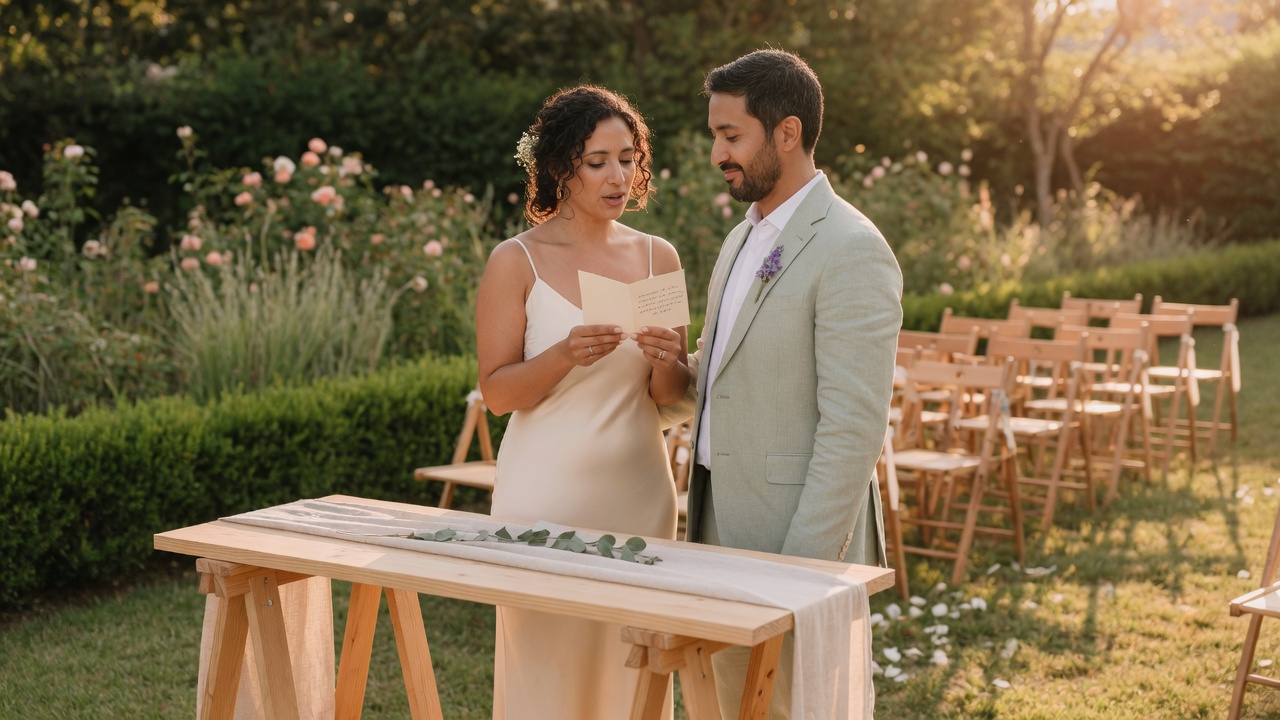
Hold the card at chest height. Read one sentence. Look at your partner. Then read the next. The pause is part of the script. Guests do not need a faster pace.
The same plan in how to say your wedding vows still applies here: short lines, a breath, and one person in front of you. If you want a lighter page instead of this classic one, use the funny yet romantic simple wedding vows script and do not mix the two tones in one reading.
"I have the page, and I am going to read it slowly. I take you to have and to hold, in the life we already know how to live, and in the days we have not met yet. I love you, and I am marrying you on purpose."
What to Hand Your Officiant
Print two copies. You keep one. The officiant keeps one. Mark the first line and the promise you refuse to skip. Ask them to wait through one breath if you stop, then to point at the next line rather than take the vow over.
Leave the phone in another room. A card does not need a passcode. If the room is bright and the paper is thin, a cream card in a large type size is easier than a phone screen at noon.
Frequently Asked Questions
What is a wedding vows script?
It is the exact wording you read or repeat during the ceremony. It can be the classic to-have-and-to-hold lines, a short personal promise, or the classic lines followed by a few sentences of your own. It is separate from the legal "I do."
Do we have to say obey?
No. Many couples leave it out. If you keep it, decide together whether one of you says it or both do, then print that version. Do not improvise the choice at the altar.
Can we repeat after the officiant?
Yes. That is the older way to use a script, and it helps if you do not want to hold a long page. Give the officiant the same wording you agreed on, in short lines, so they do not add a phrase you cut.
How long should the script be?
The classic paragraph is under a minute. A personal script with one detail and three promises is usually one minute as well. Longer is fine if you have practiced it standing up and your officiant has the time.
Should we memorize the wedding vows script?
Bring the card. Know the first line if you want to start without looking down. Memorizing the whole page is optional and often makes a blank feel larger. Your officiant should have a copy.