The ideal word count and duration for wedding vows is the length you can say slowly, to one person, while the room stays with you. For most couples that is about 100 to 200 words, which becomes roughly one to two minutes once nerves slow the voice. A shorter vow can be complete. A longer one can be lovely. The number only helps if you can stand inside it.
Use the ranges below as a clock, then read your own draft aloud. The samples are shapes. Change the sink, the kitchen, and the promises until a stranger could not wear them.
What a Ceremony Can Hold
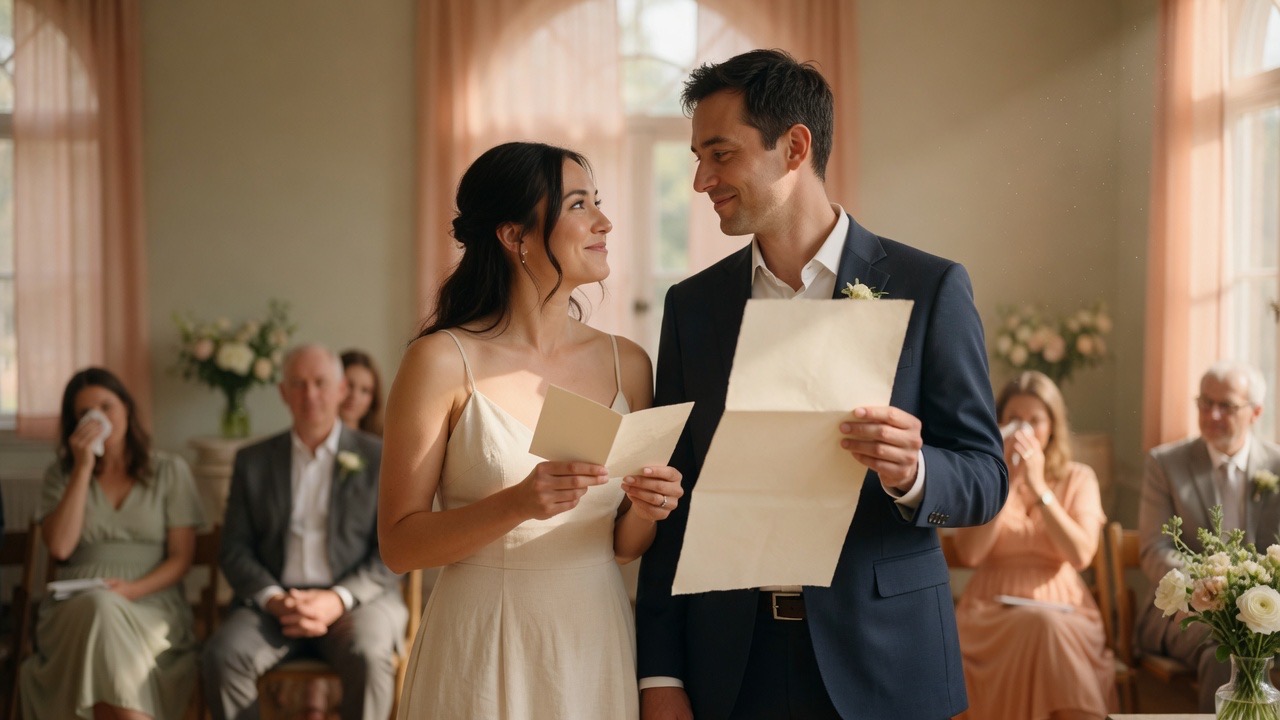
A vow is a promise said to one person while other people wait kindly. One to two minutes per person is the length most ceremonies can hold without the moment turning into a speech. That is enough for one memory and a few promises you can actually keep.
If your officiant has already given you a window, write to that window. A day with a processional, readings, and two sets of vows does not need a second toast from either of you. Start from a simple vow structure, then let the clock decide which lines stay.
Ideal Word Count and Duration for Wedding Vows
Word count is a stand-in for time. People read aloud more slowly on a wedding day than they do at the kitchen table. A clear, unhurried pace is often around 120 to 140 words a minute. A pause, a laugh, or a breath you did not plan can bring that closer to 100 words a minute. Plan for the slower number. The extra air is a gift to the person listening.
These ranges are a map, not a rule. They assume you are standing, speaking to your partner, and meaning the sentences.
- About 60 to 80 words: roughly 30 to 45 seconds. Complete, if every line is specific.
- About 100 to 130 words: close to one minute when you speak with feeling.
- About 150 to 200 words: about one and a half to two minutes. The range most couples can sustain.
- Past 250 words: often near three minutes once you pause. Beautiful in a long ceremony. Heavy if your partner wrote a minute and you wrote an essay.
Count the words, then read the draft the way you will on the day. The timer is more honest than the document stats. A method for that read-through lives in reading the draft out loud. Do the timing pass before you fall in love with an adjective.
A hundred words is a full vow when the details are yours. If you want a ceiling while you are still drafting, look at vows that stay under a hundred words and notice how much a tight frame can hold. Add length only when a new sentence says something the earlier ones did not.
Two things the count hides. Names, a setup, and an inside joke take longer in the mouth than they look on the page. And if you cry, the vow gets longer. That is allowed. Leave a little margin under the officiant's limit so a pause has somewhere to live.
Ask what the ceremony actually expects. Some officiants want both people under a minute. Some are glad to give you two. Write for the day you are having.
A Vow That Takes About a Minute
This sample is about 120 words. Read slowly, with a breath between the promises, and it sits near a minute. Read it like a list and it will feel shorter than the day deserves. Swap the morning and the habit so the detail could only be yours.
"I knew I loved you the morning the sink was full and you started it without making a speech. You do the unglamorous thing, then you ask if I slept. That is the person I am marrying. I promise to tell you the true thing before I make it clever, to share the dull work without keeping score, and to come back to a hard conversation before it hardens. I promise to leave room for the life you want, and to be gentle when you are tired of being brave. On ordinary days I will still choose you. On the days that ask more of us, I will stay. Today I marry you on purpose, in front of the people who love us."
Notice the shape. One scene. Three promises about behavior. A close that chooses them in front of witnesses. If a line could belong to anyone, it is not earning its seconds. For more of that kind of specificity, sit with vows drawn from your story and bring back the standard, not the sentences.
A Shorter Vow When Time Is Tight
Some ceremonies are genuinely short. A courthouse, a cliff, a living room with a friend ordained for the afternoon. This sample is about 60 words. At a slow pace it is roughly half a minute. It still has a detail, a promise, and a close.
"You are my calm in a loud week and my favorite person in a quiet kitchen. I love the way you check the lock and then come back for one more sentence. I promise to be honest with you, to share the ordinary work, and to keep choosing you when the day is small. I love you. I marry you today."
If the short version feels thin, add one habit and stop. A second story will push you out of the window you were trying to honor. More compact shapes, after your own line is locked, are in short and meaningful vows.
Match Length Before You Polish
Read both drafts in the same room and time them back to back. A gap of twenty or thirty seconds is invisible. A gap of two minutes makes the shorter vow feel unfinished and the longer one feel like a performance. Trim toward the same duration before you polish either voice.
You do not need the same word count. One of you may speak faster. One of you may pause more. What the room feels is the time. If one vow is a minute and the other is a minute and a half, you are in a good place. If one is forty seconds and the other is a story with three chapters, cut the second memory from the long draft, or let the short draft add a single specific line.
Agree on a ceiling in advance. Two minutes each is a generous shared limit for most rooms. Then write inside it. The promises you say to one another should feel like one decision, which is the same care described in vows you say to each other. When the lengths match, the sentences can finally sound like you.
Frequently Asked Questions
How many words should wedding vows be?
Most couples land between about 100 and 200 words. Around 120 words is close to one minute when you speak with feeling. Around 180 to 200 words is closer to two minutes once you pause. Count the words, then time a slow reading. The clock is the number that matters on the day.
How long should wedding vows last when spoken?
About one to two minutes per person is the length most ceremonies can hold. A vow near 45 seconds can be complete if every line is specific. Past three minutes, guests start hearing a speech. Ask your officiant what the rest of the ceremony allows, and leave a little room for a pause.
Is a one-minute vow too short?
A minute is enough for one true detail and two or three promises you can keep. Short vows often land harder because nothing in them is filler. If the draft feels thin, add one concrete habit. If it feels long, cut the second story before you cut a promise.
What if my partner's vows are much longer than mine?
Read both drafts in the same room and time them. A gap of twenty or thirty seconds is fine. A gap of two minutes can make the shorter vow feel unfinished. Trim the long draft toward one memory and a few promises, or let the short draft add a single specific line. Agree on a shared ceiling before you polish the sentences.
Do pauses and tears count toward the vow length?
Yes. A word count assumes a steady voice. A laugh, a breath, or a sentence you have to start again all add time the page does not show. Time the vow standing up, a little slower than conversation. If you are near the officiant's limit, cut a line so the pause has somewhere to live.
Should both people aim for the same word count?
Aim for a similar duration, not an identical count. One of you may speak faster. One of you may pause more. What the room feels is the time. Read the vows back to back. If one is a minute and the other is a minute and a half, you are in a good place.