Should wedding vows be a secret before the ceremony? For most couples, the sentences can stay folded until you are standing there. What should not stay secret is the shape of the moment: how long you will speak, whether the room will laugh, and which names or griefs the guests are about to hear.
A surprise is a gift when it is the wording. It is a problem when one of you wrote a toast and the other wrote a prayer. The conversation below happens before either card is finished. You can keep the paragraphs. Share the frame.
Three Different Kinds of Secret
People use the word secret for three different things. Some mean their partner has never seen a draft. Some mean the guests will hear the vows for the first time, which is almost always true. Some mean nobody, including the officiant, knows a line is coming that will change the temperature of the room.
The first kind is a choice about romance. The second is simply how a ceremony works. The third is the one that causes trouble. Your partner can love a surprise and still need to know that you plan to mention their mother, their child, or a joke that only lands if they are ready to laugh.
Share the Frame, Keep the Sentences
Agree on a frame while the words are still yours. A shared window of about one to two minutes keeps the ceremony kind to both of you. If you want the clock spelled out, read how long a spoken vow usually runs once you slow down and then come back to the privacy question. The number is logistics. The sentences can wait.
Name the tone in one plain sentence. Serious. Warm, with one light line. Funny, and then sincere. You do not have to trade drafts to do this. You do have to avoid one person roasting the relationship while the other is making a vow about illness, faith, or a child in the front row.
List the topics that need a warning, not a full draft. A parent who died. A child who will hear their own name. A previous marriage. An inside joke that would embarrass someone in a chair. Put those on a shared note. Then write alone. When you sit down, a simple order for a vow keeps the private page from wandering into a speech.
Writing Apart, and When to Sit Together
Writing apart is the version most couples picture, and it is a sound default. You get to hear the person you love say something you did not edit. That first hearing is part of the ceremony. If you have already workshopped every line on the couch, the altar becomes a second reading of a document you both approved.
Apart does not mean uncoordinated. You can sit at the same kitchen table, on different ends, and still refuse to swap screens. Talk about the frame. Then look down. The work of filling the page lives in a calm walkthrough for getting from a blank page to a finished vow. Steal the order of operations. Leave your life on your own card.
Some couples should write in the same document. Choose that on purpose. Write together when one of you is frozen and a conversation will unlock a real detail. Write together when your senses of humor are far apart and a line needs to be heard before the week of the wedding. Write together when the vow has to carry a shared decision: how you will speak about children who are already yours, or a loss you both live inside.
If you write together, stop before the page turns into a joint speech. Each of you still needs a voice. Read your half aloud as if the other person had not helped. If it sounds like minutes from a meeting, split the draft and rewrite the promises in the first person. Hold yourself to the standard for vows that could only belong to your life together, whether or not you kept the file private.
A useful test: could your partner predict the story you picked? If they could, the surprise was never the point. The point is the promise they have not heard you make. Keep that line to yourself until the day, even if they helped you find the memory that sits above it.
A Vow Written to Be Heard Once
This sample is written to be heard once, on the day. It is about 140 words. It names a habit, then makes promises the listener has not pre-approved. Change the bowl, the grocery call, and the quiet until the card would fail if you handed it to another couple.
"I have not let you read this, and I am a little proud of that. You already know the facts. You know I lose my keys in the same bowl every night, and that I call you from the grocery store about bread we do not need. What you have not heard is the sentence I have been saving. I promise to tell you the hard thing while it is still small. I promise to protect your quiet when the house is full. I promise to keep choosing an ordinary Tuesday with you, even when a bigger plan would look better from the outside. I love you. I have loved you in private for a long time. Today I get to say it where people can hear."
Notice what stayed off the page. No punchline that needs a warning. No name of a guest. The surprise is the promise, which is the safest kind. If your real draft mentions a person in the chairs, tell your partner the topic the week before and keep the sentence.
A Shorter Card You Can Still Keep Folded
A shorter card can stay secret too. This one is under 80 words. It still has one habit and three promises. It is the length that works when the ceremony is a courthouse, a living room, or a cliff, and the rest of the day is the party.
"You are the person I want in the room when the news is good and when it is not. I love that you text me when you land, even if the flight was short. I promise to be honest with you, to share the dull work, and to stay kind when we are tired. I kept these lines for today on purpose. I marry you."
If the short version feels like a placeholder, add one true habit and stop. A second story is how a private vow turns into something you wish you had shown them earlier. One specific line is enough for a first hearing.
The Night-Before Trade
The night before, trade facts, not files. Each of you can say how long the vow takes when you read it slowly, the tone in one word, and any name the room should be ready to hear. That is enough. You do not owe each other the paragraph.
If one of you is anxious and wants to hear it early, treat that as care. Read it once, in a quiet room, and then leave it alone. Some people cannot enjoy a ceremony while bracing for a joke or a grief they did not see coming. Hearing it the night before can make the morning kinder. The public moment still counts.
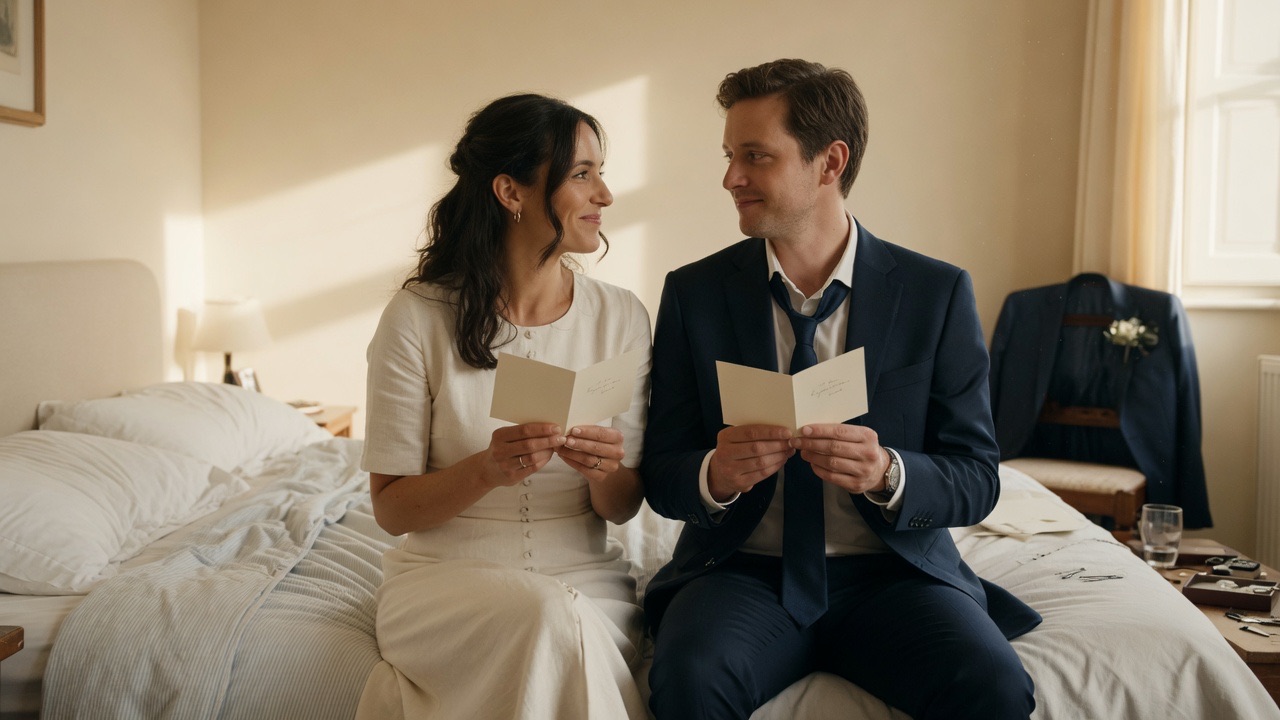
If you both want the first hearing to happen in front of everyone, protect that. Leave the printed copy in a jacket, not on the kitchen table. A friend does not need to check the tone unless your partner agreed that friend may see it. A surprise shared with the wedding party is no longer a secret, and it is rarely a kinder one.
When you are deciding what the two vows should feel like side by side, use the same care described in matching the vows you say to one another. Length and temperature can match while the words stay unseen. If you would rather have a second exchange with nobody watching, private vows exchanged away from the guests can sit beside a shorter public promise. You can have both. You do not have to show either draft tonight.
Frequently Asked Questions
Should wedding vows be a secret before the ceremony?
The wording can stay private until you speak it. Share the length, the tone, and any topic that will land on a guest, a child, or a grief. A surprise works when it is the sentences. It causes trouble when it is the mood of the room.
Do we have to show our vows to the officiant?
Ask what your officiant expects. Some want a look for timing and for anything that would surprise the families. Some are glad to know only the length. If a line mentions a person who will be sitting there, give the officiant that context even if your partner has not read the draft.
What if one of us wants to hear the vows early?
Hear them once, in private, if that person needs the day to feel safe. Then stop editing. Wanting a preview is often a request to not be surprised by a joke, a loss, or a promise they were not ready to receive in public. The ceremony still counts after a quiet read-through.
Is it better to write wedding vows together or apart?
Write apart when you want the first hearing to happen at the ceremony. Write together when one of you is stuck, when your senses of humor are far apart, or when the vow has to carry a shared fact about children, family, or loss. Either way, agree on length and tone before you polish the sentences.