Meaningful ways to preserve your wedding vows start the week the ceremony is over, when the card is in a jacket pocket, a notes app, or the officiant's folder. The words were said. A year from now you will want one copy you can still read without hunting through bags and cameras.
This page is the life of those words after the day: whether to keep them, how they last for years, a page for the album, a keepsake, an anniversary reading, a letter when a promise shifts, and a copy for family who were not in the room. A renewal, if you want one later, is its own occasion.
Should You Keep the Vows
Keep them if you want to hear your own voice on an ordinary anniversary, and not only in a video you will not open. A messy draft counts. The sentence you cut at the altar, because your hands were shaking, is often the one you are glad to find later.
You can keep the vows and still decline to hand them around. Guests heard what you chose to say in the room. The page in the drawer can hold a longer version, a private line, or the exact words you spoke. Agree on that together before a parent asks for the file.
What lasts is the detail that would fail in someone else's house. A generic promise ages into a card anyone could have signed. Hold the page to a vow built from one detail only the two of you would recognize, and keep that version.
"I love that you text me when you are on the way home, even when the trip is short. I promise to tell you the hard thing while it is still small. I promise to share the dull jobs and the good news in the same evening. I will keep these sentences. I want to hear them again when the day has gone ordinary."
If the spoken vow was shorter than the draft, keep both, and mark which one you said. The person you will be should not have to guess.
How to Preserve Them for Years
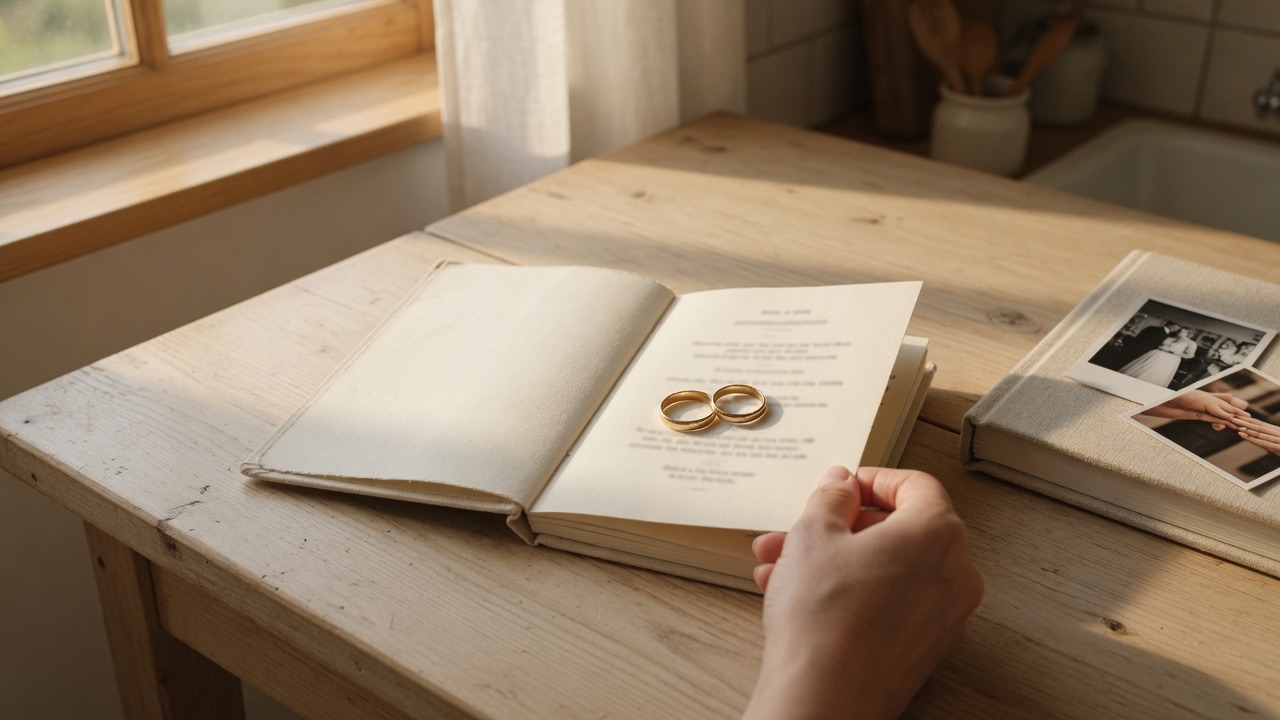
Preserve the vows the way you preserve a letter you might actually reread. One paper copy in the house you live in. One digital copy you can both open. A third hiding place, a parent's attic or a folder only one of you can find, is how a vow disappears.
Paper wants a drawer, a book, or a box on a bedroom shelf. An attic gets hot. A basement gets damp. A storage unit is a place you pay to forget. The folder can be plain. Label it with both names and the wedding date, so a later reader knows whose words these are.
For the digital copy, export a PDF or photograph the handwritten page in daylight, flat, with the edges in the frame. Put that file where both of you can reach it: a shared album, a shared drive, or an email you send each other with a subject line you will remember. A screenshot buried in one phone is not a copy. Phones get replaced.
Write the date you spoke the words at the foot of the page, small. If you fix a typo later, keep the original and add a note beside the clean copy. You are saving the voice of that day, including the sentence you would phrase differently now.
Look at the paper once a year, when you change the clocks or pull the wedding album down. If the ink is fading or the fold is splitting, print a fresh page from the digital file and store the two together. This is a document you are allowed to touch.
Printing the Vows in an Album
An album wants one page, not the speech. Slip it in after the ceremony photographs, or on the first spread, before the pictures start telling the day. A full letter-size sheet folded twice will fight the binding. A page about the size of a photograph sits more quietly.
Set the type large enough to read at the kitchen table without leaning in. Cream paper and dark ink age more kindly in a book you open than a glossy print that glares. Leave a real margin. The vow is the picture. The album already has the faces.
"You save me the quiet chair and the last piece of Sunday. I promise to come home kind, to tell the truth early, and to keep choosing this ordinary life with you. If this page is all that is left of the day, it is enough."
If the draft is still a speech, cut it before you shrink the paper. Start from a short vow that still holds one real habit and fits a single album page, then change the chair and the Sunday until they are facts from your house. Two stories is how a page becomes a letter the album cannot hold.
Print two. One goes in the album. One stays loose, so you can read it on an anniversary without peeling a sleeve.
Turning the Words Into a Keepsake
A keepsake is the object you want to find ten years from now. A small book with both vows. A single framed page. A card that used to live in a jacket. It is a later print. The page you held while you spoke can retire, or it can be the object, if the paper still looks like something you want on a shelf.
Choose the object before you choose who prints it. A frame wants air around a short vow. A book wants both voices, and a margin wide enough that the binding does not eat the last word. When the sentences are finished, follow where to print wedding vow books and keepsakes. That guide owns the shop, the stationer, and the blank book. This page stops at the decision: which object, and which sentences go on it.
Leave the thank-you list off the page. Names of every friend who helped will crowd the promise and date the object. Print the sentences you want to read in ordinary light, on an ordinary anniversary, without an explanation.
Reading Them Again on an Anniversary
Once a year is enough. The wedding date works. So does a quiet Sunday in that week, when nobody is performing dinner. Take the loose copy, not the album page you would have to peel out.
Read at the kitchen table. One of you can read the vow you wrote. Or you can trade, and hear your own promises in the other person's voice. Read one paragraph if a full page feels like a ceremony you did not plan. Stop when you have heard the line you needed. This is a private reading. It is not a test of whether every adjective still fits.
A phone on the table is enough if you want a record. You do not need a new video for relatives. The point is that the sentences come back into the house.
Sharing Them With Family Who Could Not Attend
Someone who missed the ceremony may ask for the vows. A paragraph in a letter, a photograph of the page, or three sentences read on a call is a real gift. The whole page is optional.
Ask each other before you send anything. A line that made the room laugh may be a story one of you does not want a parent to keep. If part of the vow was meant to stay between you, send the other part. Lines you meant only for each other can live in the same drawer and stay out of the family copy.
Mail paper when the person is not going to open a link. A short transcription in your own handwriting feels closer to the day than a forwarded file. Put the date on it. Say it is an excerpt when it is an excerpt.
An Anniversary Letter When a Promise Changes
Promises change shape. A vow to live in one city becomes a vow to choose the next city together. A line about children meets a different life than the one you pictured. Keeping the original page does not freeze you inside it. On the anniversary, write a short letter that names the promise and says what it means now.
"Five years ago I promised to say the hard thing while it was still small. I have kept that less often than I meant to. This year I am writing the promise down again, because it is the one that still needs me. I choose you, with the years we already have and the ones we have not spent."
Keep the letter with the original, not in place of it. The first page is the voice of the wedding day. The letter is the voice of the marriage. If a line no longer feels true, say so in writing. A drawer full of sentences you quietly abandoned starts to feel like a record you failed.
Some couples want to say the new words out loud, with a witness or with the people who love them. That is a renewal. It has its own shape: what the years have taught you, and the promises for the next chapter. When you are planning that day, the next step is the vow renewal ceremony guide for the day you say the new words. Use it for the ceremony. Leave the original vows in the drawer this page made for them.
Frequently Asked Questions
Should we keep our wedding vows after the ceremony?
Yes, if you want to hear them again. Keep one paper copy in the house you live in and one digital file you can both open. You can keep the words private. Guests do not need a second publication of what they already heard.
How do you preserve wedding vows for years?
Store the paper out of attic heat and basement damp, label it with both names and the wedding date, and keep a PDF or a clear photo of the page in a shared folder. Look at the paper once a year and print a fresh copy if the ink is fading.
Can we put our wedding vows in a photo album?
Yes. Use one readable page, about the size of a photograph, and keep a second loose copy for anniversary readings. Cut the vow down to a page before you shrink the type.
What if a promise in our wedding vows no longer fits?
Keep the original page and add a short anniversary letter that names the promise and says what it means now. If you want to speak new words in front of people, that is a vow renewal, and it can sit beside the first vows rather than erase them.