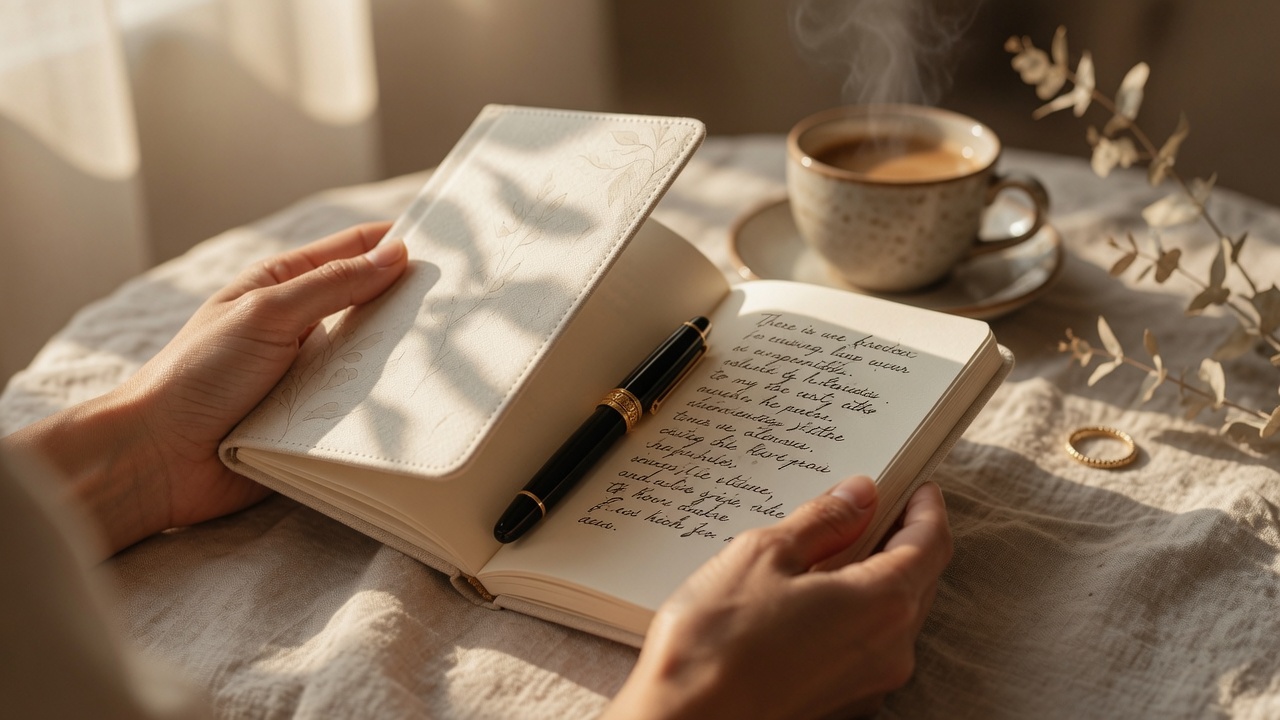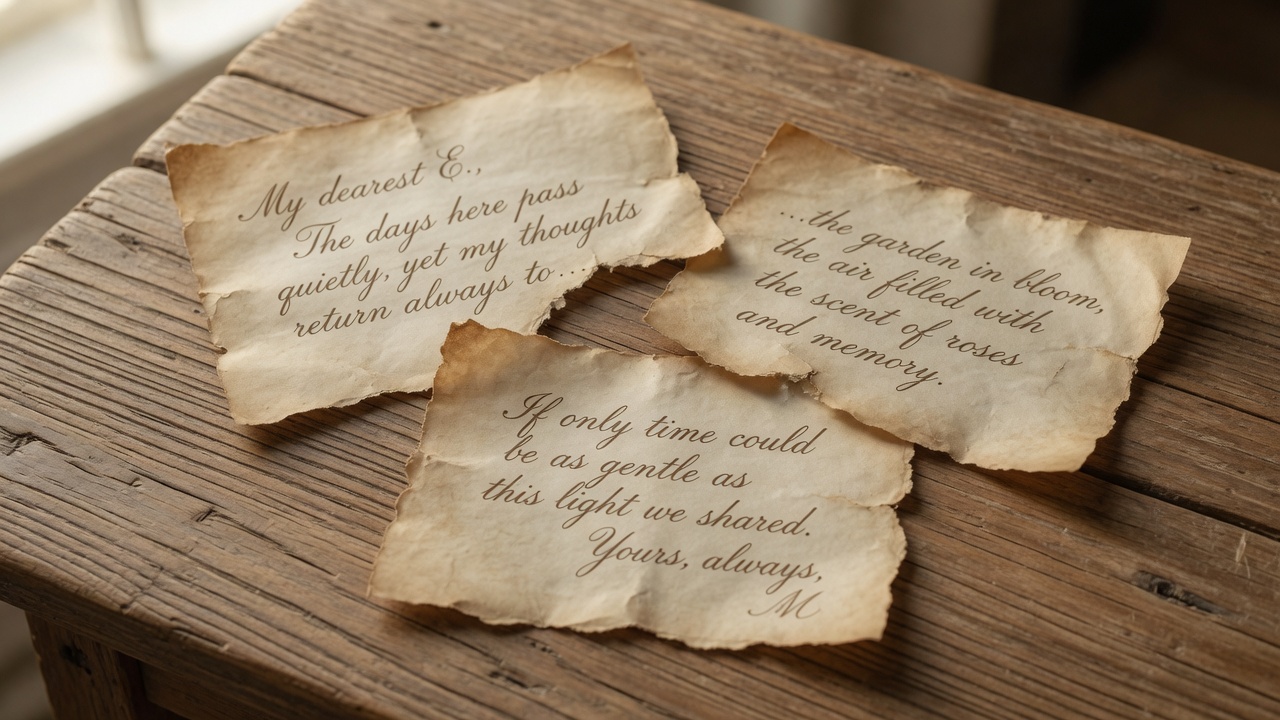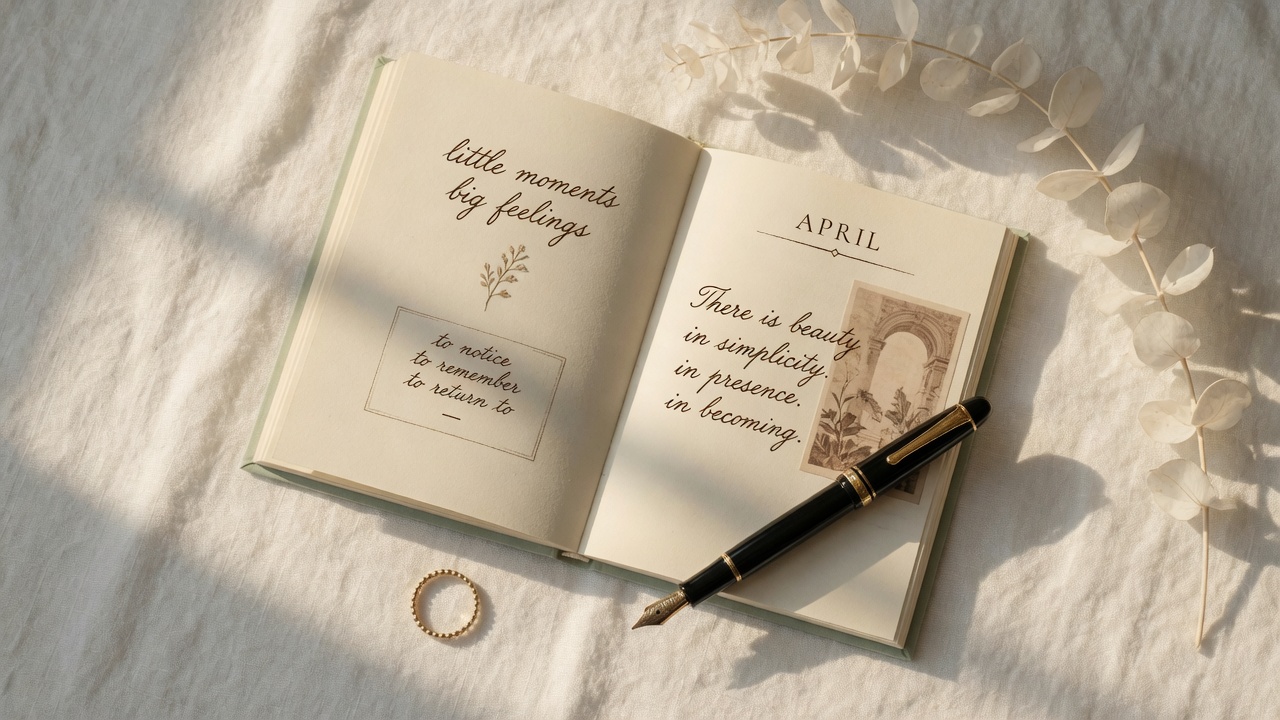
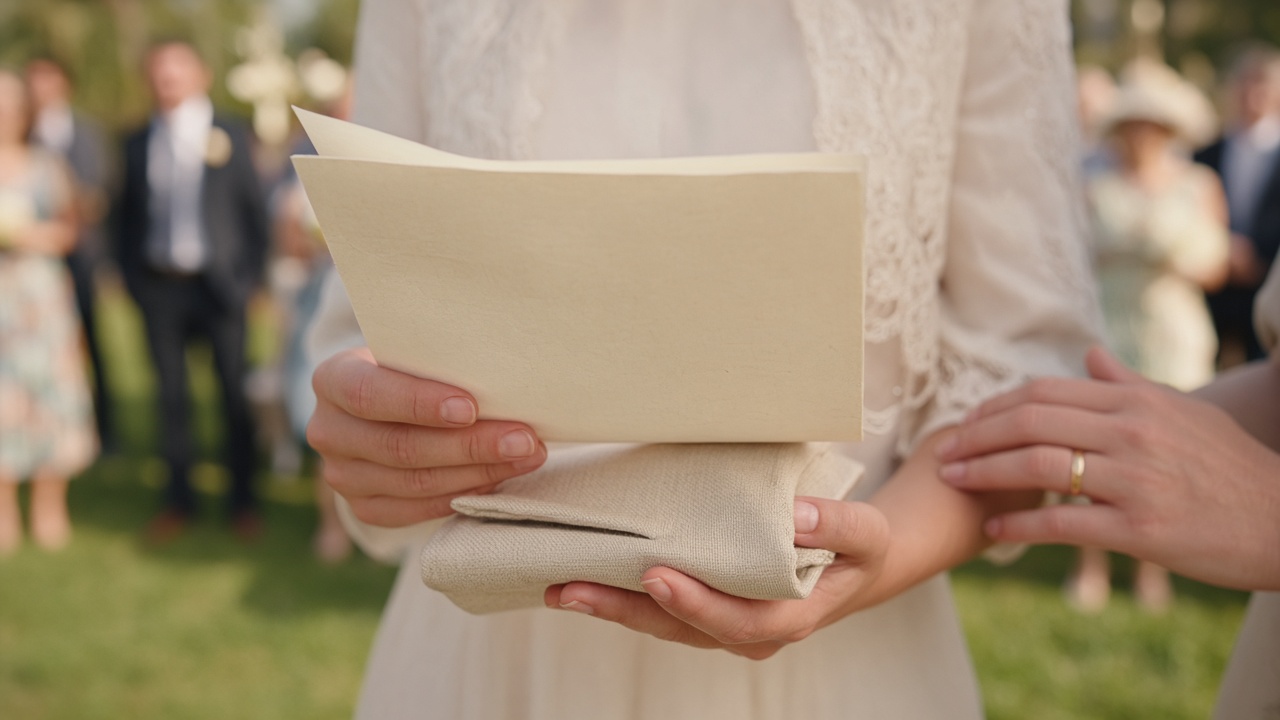
What to print your wedding vows on is the object in your hands while you speak: a single card, a small booklet, a handwritten page, or a phone. The words can already be finished. This page is about the paper, the screen, the wind, and whether the officiant can see the same lines you are reading.
Practice, memorizing, and the moment a line slips already have their own guides. Stay here for the thing you are holding. After the day, that card can become a keepsake. That choice comes later.
The Object in Your Hands
Four objects cover almost every ceremony. A single card. A small booklet. One handwritten page. A phone. Pick the one you can hold at chest height while one hand stays free for your partner.
Print when you want type you can read at arm's length and a spare copy that matches. Handwrite when the page itself is part of what you want your partner to see, and when your writing stays large and dark. A phone works when paper will fight the weather. It struggles when the screen locks, dims, or turns into a mirror.
How you stand, how fast you speak, and where your eyes go are in how to say your wedding vows. Come back to this page for the object between your fingers when you begin.
A Single Card
A card is the most reliable object for a vow you can say in about a minute. Use one side. Leave a wide margin. Set the type large enough that you can read it with the card at your chest, rather than down by your waist. A 5 by 7 inch card, or a half sheet of thick paper, is easier to hold than a full letter page that folds when the air moves.
Cream or white stock, matte, heavy enough that a breeze lifts a corner and leaves the card in your hand. Dark ink. A plain typeface. Two sides means you will flip at the worst moment, so keep a longer vow in a booklet instead.
"I choose you on the ordinary Tuesday, not only in a room full of flowers. I promise to tell you the hard thing while it is still small, and to come home kind. If my voice thins, this card still has the sentence."
Read that length once while holding the actual card. The practice sessions live in how to practice your wedding vows. The test on this page is smaller: the card stays open, and the lines stay visible.
Print two identical cards. One is yours. One can sit with the officiant, face up, in case you trade places or lose the line. Same words. Same breaks.
A Booklet or a Handwritten Page
Choose print or handwriting before you choose a shop. Print wins when several people need the same words: you, your partner, and the officiant. A printer keeps the line breaks. Handwriting wins when one page, in your hand, is the point, and when you have time to write it twice so the spare matches.
A booklet is a few small pages. Staple or tie two or three leaves if the vow runs long, and number them. A booklet you have to hunt through will stall you. If you still want the words by heart, keep the booklet as the backup in your pocket. The learning itself is how to memorize your wedding vows. A printed copy belongs in the bag even when you plan to speak from memory.
Handwriting needs a pen that stays even, and paper that does not bleed. Write larger than your usual notes. Leave space between sentences so your eye can find the next line. Write the spare the same day, while your hand still makes the same letters. A page written at midnight in a thin pen will fail in daylight.
"You leave the porch light on when I am late. I promise to notice that, and to say so. I promise to share the dull jobs and the good news in the same evening. If I lose my place, I will look at this page and find you again."
The officiant needs a copy when the ceremony script depends on your words. Some officiants read a line, then wait. Some only need to know you have finished. Ask which. If they cue you, they need the same paragraph breaks, your name on the page, and paper they can hold outdoors. Send it a day ahead, and bring a duplicate in your bag.
Tell them whether you will read every word or save a private line for the two of you. A sentence meant only for your partner can stay off their page. Agree on that while you are still at the kitchen table. If both of you are reading, give each vow its own card or its own short booklet, so nobody is flipping into the other voice.
A Phone, Wind, and Bright Light
A phone stays put in wind that would take a card across the grass. It fails in other ways. Turn off notifications. Turn off auto-lock, or set it long enough for the whole vow. Raise the brightness before you walk up, while you can still see the control. Use a note with large type, one paragraph at a time.
Outdoors, bright light washes a glossy screen and thin paper alike. Matte paper holds up better than gloss. A phone shaded by your hand holds up better than a phone tilted at the sky. Stand so the screen faces you. Test the note once in light like the ceremony, on the day you decide, and leave the settings alone after that.
"The wind can take a loose page. It cannot take this promise. I will find the next line, look up, and say it to you. I choose this life in the bright hour and in the quieter rooms after."
Wind on paper wants a clip, a weight, or a card small enough to pinch between finger and thumb. A letter-size sheet with one hand free will fold and sail. On a gusty day, prefer the card or the phone, and keep the second copy in a pocket with a clip.
If a line leaves you, the object is how you find it again. What to do with the room and the next breath is in what to do if you forget your wedding vows at the altar. Hold the card or the phone the way you already practiced. Stay with the object you chose.
After the Day, a Different Object
The card that got you through the ceremony can look tired by evening. A crease, a clip mark, a thumb smudge. It did its job. Keeping the words for years starts the week after, once the paper is home.
The next page is meaningful ways to preserve your wedding vows: one readable copy in the house, an anniversary reading, and a letter if a promise changes shape. A bound book or a framed page comes later. When you want that object, follow where to print wedding vow books and keepsakes. That is the shop for the keepsake. The ceremony object is the card, booklet, page, or phone you held while you spoke.
Frequently Asked Questions
What should I print my wedding vows on?
A single heavy card is enough for a vow you can say in about a minute. Use a small booklet if the words run longer, a handwritten page if the writing itself matters, or a phone if wind will take the paper. Print a second copy for yourself and one the officiant can read if they cue you.
Should wedding vows be printed or handwritten?
Print them when you want large, even type and a spare that matches line for line. Handwrite them when one page in your hand is part of the promise and your letters stay dark and large. Write or print the second copy the same day, so a smudge or a gust still leaves you with the words.
What size should a wedding vow card be?
A 5 by 7 inch card, or a half sheet of thick paper, is easier to hold at chest height than a full letter page. Use one side, a wide margin, and type you can read without dropping the card to your waist. Number the pages if the vow needs a small booklet.
Can I read my wedding vows from my phone?
Yes. Turn off notifications and auto-lock, set the type large, and test the screen in light like the ceremony. Outdoors, glare is the usual failure. A paper card is calmer when the day is shady and still. A phone is calmer when the wind is up.
Does the officiant need a printed copy of the vows?
Ask them. If they cue you, or read a line and wait, they need the same words and the same paragraph breaks, on paper, with your name on the page. Send that copy a day ahead and bring a duplicate. A line meant only for your partner can stay off their page when you have agreed on it.